

Typing shouldn’t hurt, yet thousands of professionals end their day with throbbing wrists and numb fingers. The foundation of **wrist strain prevention desk** habits is achieving a neutral, flat hand position supported by a soft surface.
Part of TidySetup’s comprehensive resource series: explore our master Ergonomic Workstation Alignment Master Guide for complete workstation benchmarks.
In this guide, I will detail the precise keyboard positioning and environmental tweaks needed for effective **wrist strain prevention desk** calibration. By eliminating contact stress, you can keep your hands pain-free throughout a long workday. Mastering your **wrist strain prevention desk** setup is a vital investment in your health.
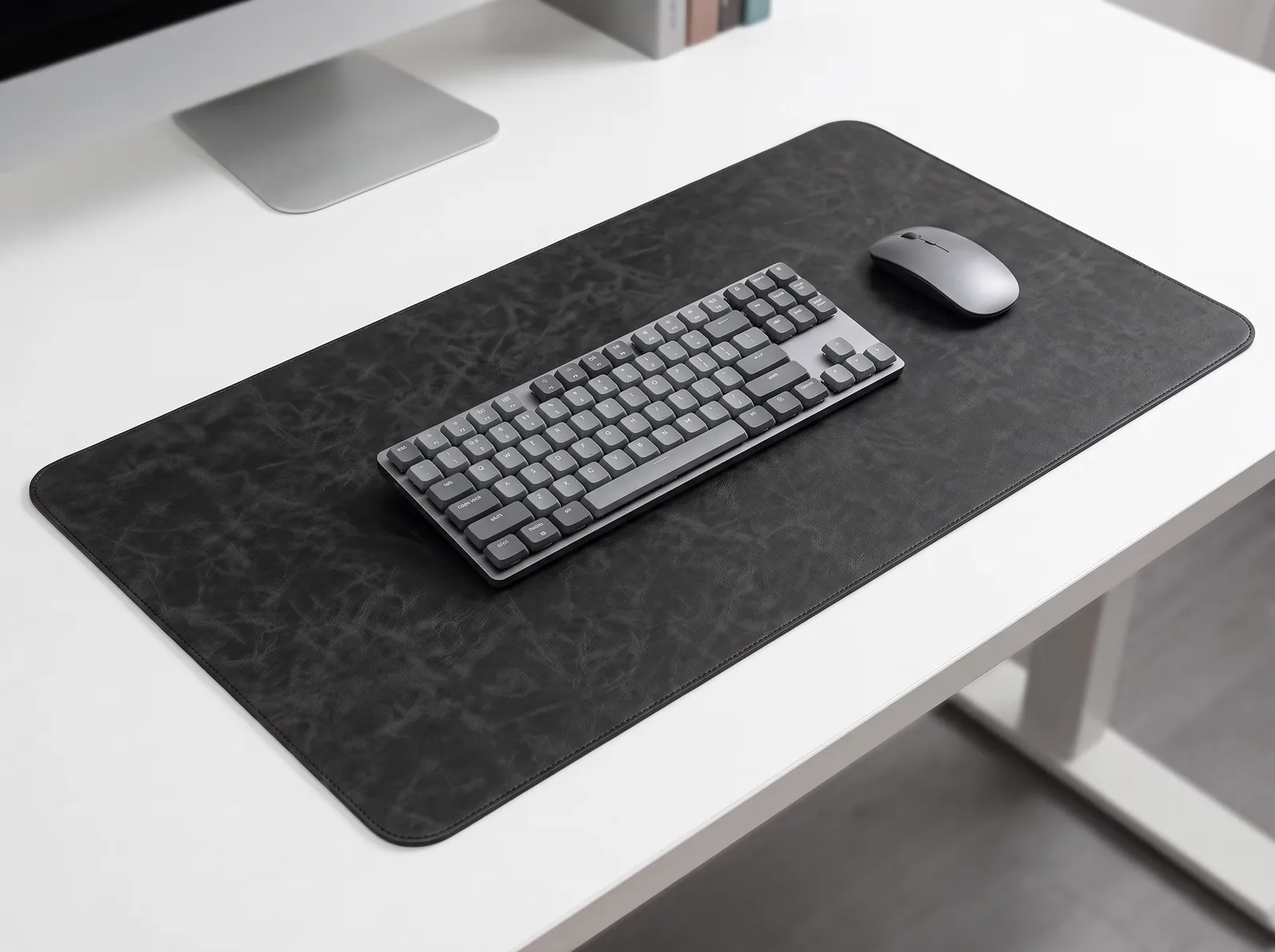
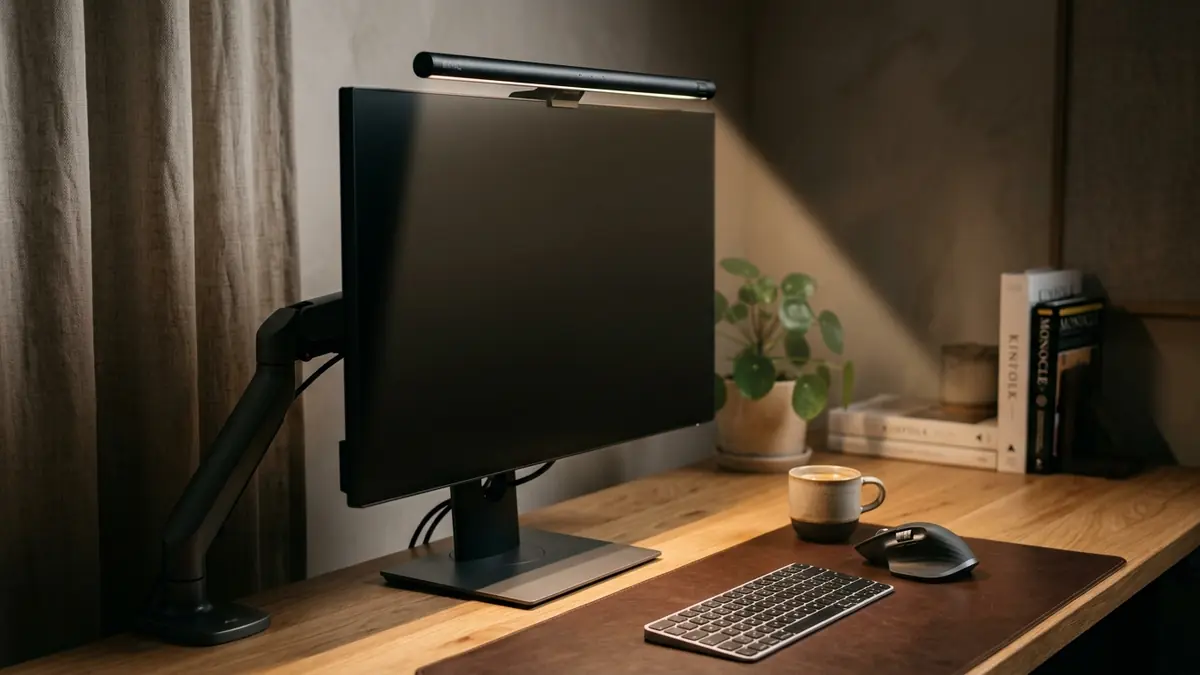
Resting your palms and forearms on a cushioned, smooth cushioned PU leather desk mat eliminates hard pressure points along the sharp edge of your desk.
Alex Thornton is a Certified Ergonomics Consultant and Workplace Wellness Specialist. After earning a master’s degree in Human Factors Engineering from Cornell University and certification from the Board of Certification in Professional Ergonomics (BCPE), Alex spent eight years as the lead ergonomics advisor for a Fortune 500 tech company. In 2020, Alex founded “Ergonomics Everyday,” a consultancy that has evaluated over 500 workspaces. Their hands-on experience ranges from advising startups on cost-effective ergonomic solutions to redesigning entire office floors for maximum employee comfort and productivity.
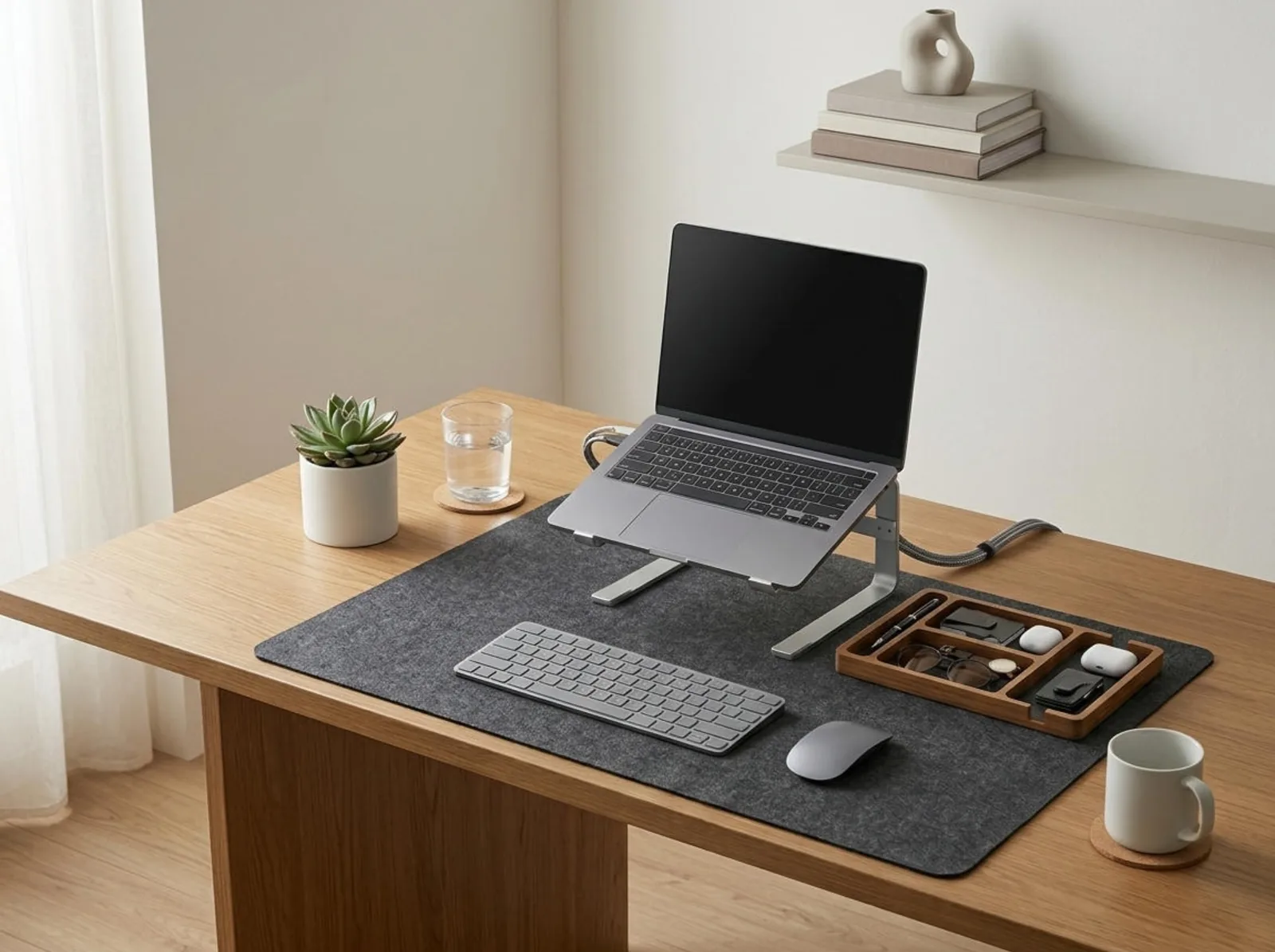
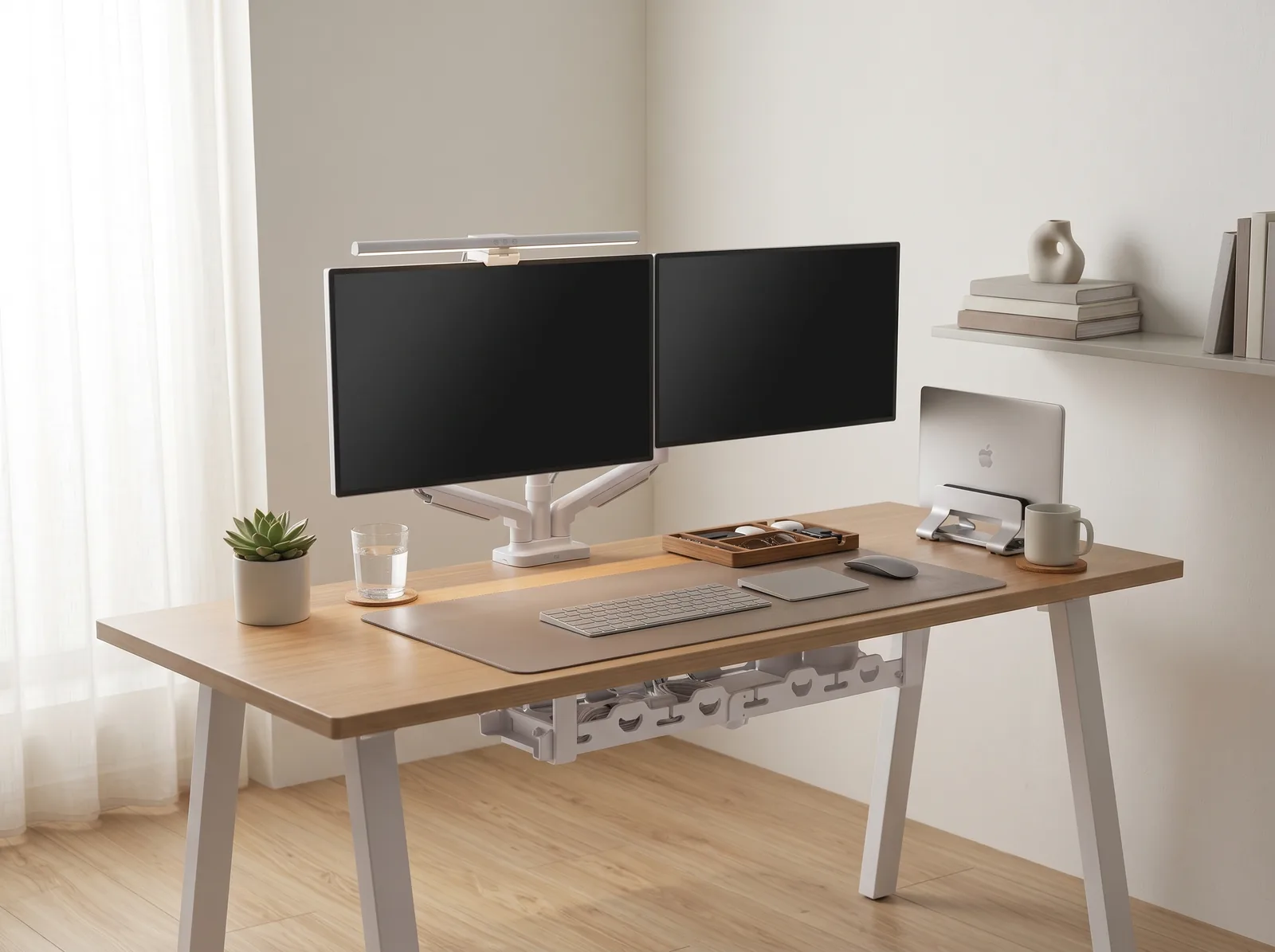
If you’re looking for a starting point, the Minimal Desk Starter Kit includes everything you need for a clean, ergonomic workspace, laying the groundwork for healthy daily habits.
What Causes Wrist Pain While Typing?
Wrist pain while typing is primarily caused by “extension” (bending the hands upward) or “deviation” (bending the hands sideways) for prolonged periods, compounded by the hard pressure of resting your forearms directly against a rigid desk edge. This combination pinches the median nerve and inflames the tendons passing through the carpal tunnel.
To understand the solution, we must look at the overall environment. An ergonomic workstation is a workspace configured to support the body’s natural posture, reduce strain, and prevent repetitive stress injuries during prolonged work. Specifically, a desk setup is the complete arrangement of furniture, tools, and accessories that form a person’s workspace, optimized for comfort, productivity, and health.
In over 500 workspace evaluations, one of the most common issues I encounter is keyboards with the back kickstands popped up, which actively forces the user’s wrists into a damaging, upward-angled extension.
- Typing on keyboards that are too thick or aggressively angled upward.
- Resting the sensitive undersides of the wrists on a sharp desk edge.
- Reaching too far forward to type, which pulls the elbows away from the body.
- Using a mouse that is too small, requiring a tight “claw” grip.
Your hands are precision instruments and require an environment built for precision. “An ergonomic workstation facilitates **wrist strain prevention at a desk** by ensuring all manual input devices can be operated while maintaining a completely neutral, flat joint alignment.” If you ignore these **wrist strain prevention desk** principles, the risk of repetitive strain increases.
You achieve a neutral wrist position by keeping your hands perfectly straight and level with your forearms while typing. For proper **wrist strain prevention at your desk**, position your keyboard flat on the desk surface and ensure your chair is raised high enough so your arms hover comfortably. Consistent **wrist strain prevention desk** habits are the only way to avoid chronic pain.

The cardinal rule for upper limb comfort is the 90° Elbow Rule: Elbows should be bent at 90 to 100 degrees, resting on desk or chair arms, with wrists kept neutral and flat. If you violate this rule, strain is inevitable.
When you type, your hands should essentially “float” above the keys. You should not be anchoring your body weight on your wrists.
| Workspace Metric | Poor Wrist Posture | Neutral Wrist Posture |
|---|---|---|
| Keyboard Angle | Tilted up at the back (positive tilt) | Flat or slightly tilted down away from you (negative tilt) |
| Forearm Angle | Reaching upward toward the desk | Parallel to the floor |
| Contact Pressure | High; resting heavily on the desk edge | Low; hands hover or rest lightly on a soft mat |
If you are also struggling with upper back tension due to reaching, you should review our guide on how to prevent neck pain from bad posture at your desk, as arm positioning directly impacts the shoulders.
Why Is a Desk Mat Essential for Ergonomics?
A desk mat is essential for ergonomics because it provides a consistent, slightly cushioned surface that dramatically reduces the contact stress (hard pressure) on the median nerve when your arms rest on the desk. A quality mat also defines your optimal “working zone,” subconsciously encouraging you to keep your mouse and keyboard close to your body.
For a hands-on solution, many of my clients start with a Large Natural Cork Mouse Pad Desk Mat — it covers a significant portion of the desk, offering a warm, soft texture that eliminates the jarring coldness and harshness of a bare wooden or glass table.
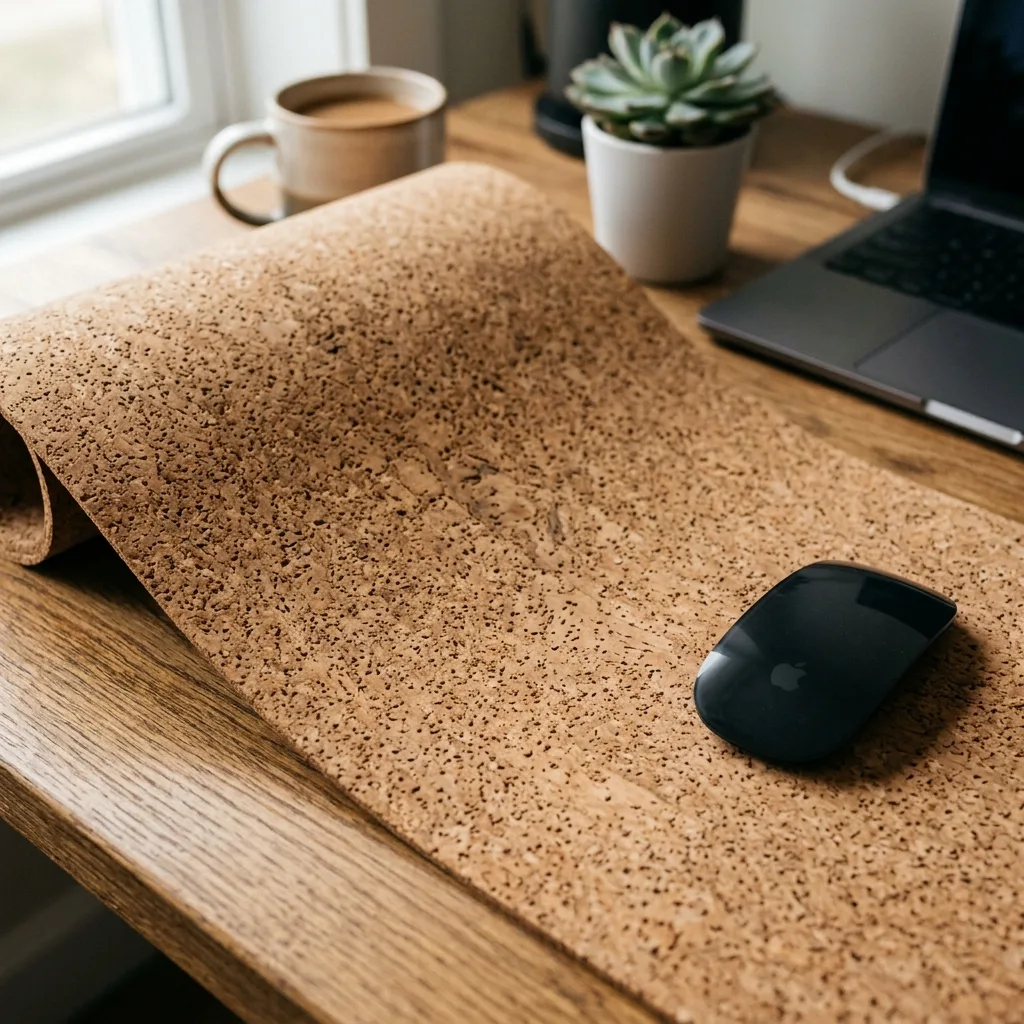
Furthermore, a desk mat contributes to overall workspace productivity, which refers to the efficiency and output quality achieved through an intentionally designed and organized work environment. A mat prevents your keyboard from sliding and ensures your mouse tracks perfectly, reducing micro-frustrations.
“The 90-degree elbow rule states that forearms should rest at a 90 to 100 degree angle relative to the upper arm, with wrists kept neutral and flat on the desk surface.”
How Should You Position Your Mouse?
You should position your mouse immediately adjacent to your keyboard, on the same level surface, so you do not have to stretch your arm outward to reach it. Keeping the mouse close ensures your elbow stays tucked near your ribs, preventing strain in both the wrist and the rotator cuff.
Many users push their mouse too far back or off to the side, which forces the arm to internally rotate and places excessive strain on the outer wrist.
- Use a mouse that fits the size of your hand; your fingers should not hang off the front.
- Do not grip the mouse tightly; rest your hand on it gently and move it from the elbow, not just the wrist pivot.
- Ensure the mouse area is completely clear of obstacles.
Keeping this area clear often requires managing the small items that crowd the space. A desk organizer is a storage accessory designed to reduce desktop clutter by providing designated compartments for office supplies and accessories. Utilizing a TidySetup Solid Wood Desk Organizer keeps pens and notes out of your mouse’s path.
The Ideal Keyboard Setup Workflow
Achieving a pain-free setup requires you to analyze the physical relationship between your chair, your desk, and your hands. Follow these precise steps to calibrate your workstation.

- Flatten the keyboard: Close any kickstands on the bottom of your keyboard. It must lay entirely flat.
- Place the mat: Lay your desk mat down so the front edge aligns with the front edge of your desk, protecting your forearms from the hard corner.
- Center your work: Position the “G” and “H” keys directly in line with your belly button, so you aren’t twisting to type.
- Adjust chair height: Raise your chair until your forearms are parallel to the floor when your hands rest on the keys.
- Check your feet: If raising your chair lifted your feet off the floor, add a footrest.
This localized hand setup is a crucial component of preventing desk-related pain. It works in tandem with proper monitor height and seating posture.
If you are considering altering your overall workstation style, you might be interested in our comparison: Standing vs Sitting Desk: Which is Better for Your Body?, as the height mechanics change entirely when you stand.
Wrist Strain Prevention FAQs
1. Are split ergonomic keyboards worth the investment?
Yes, for individuals suffering from chronic wrist pain or broad shoulders, split keyboards are highly beneficial. They allow you to angle the two halves to match the natural inward angle of your arms, preventing “ulnar deviation” (bending the wrists outward toward the pinky).
2. Should I use a gel wrist rest?
Soft palm rests can be helpful if you rest the meaty part of your palm on them between typing sessions. However, you should never rest your actual wrists on them while actively typing, as this compresses the carpal tunnel. Your hands should hover while typing.
3. Why does my pinky finger go numb when typing?
Numbness in the pinky and ring finger is often a sign of cubital tunnel syndrome, which is nerve compression at the elbow, not the wrist. This usually occurs when you rest your elbows heavily on hard armrests or keep them bent at a sharp, acute angle for too long.
4. How do I know if my desk is too high for typing?
Your desk is too high if you find yourself shrugging your shoulders or if your wrists are bent backward (extended) to reach the keys. Your forearms should slope slightly downward or remain perfectly parallel to the floor.
5. Do mechanical keyboards cause more wrist strain?
Mechanical keyboards themselves do not cause strain, but they are often physically thicker than low-profile laptop keyboards. This extra height requires you to bend your wrists upward more, making a palm rest or a higher chair adjustment necessary to maintain a neutral angle.
6. What is the best stretch for tired wrists?
The “prayer stretch” is highly effective. Place your palms together in front of your chest, fingers pointing up, and slowly lower your hands toward your waist until you feel a stretch in your forearms. Hold for 15 seconds, and repeat frequently throughout the day.
Conclusion: Start Your Wrist Strain Prevention Desk Routine Today
Effective **wrist strain prevention desk** strategies rely on eliminating bad angles and hard contact points. By enforcing a flat keyboard position, utilizing a premium desk mat, and adhering to the 90-degree elbow rule, you can type comfortably for hours.
**Workspace productivity** is directly tied to your physical comfort. A well-organized workspace is a small investment in your daily focus. If you’re ready to get started, take a look at the complete TidySetup collection to anchor your **wrist strain prevention desk** setup today.