

Calculate your personalized ergonomic seated desk height, standing desk surface height, seat pan height, and screen top-line alignment based on ANSI/HFES 100-2007 and OSHA Computer Workstation standards.
📐 Ergonomic Desk & Monitor Height Calculator
Calculated according to ANSI/HFES 100-2007 & OSHA Computer Workstation standards
🎯 Personalized Alignment Targets
The Biomechanics of Ergonomic Desk & Monitor Height
Most commercial desks are manufactured to a fixed height of 29 to 30 inches (73.6 to 76.2 cm), a standard engineered in the mid-20th century to accommodate the 95th percentile of adult males. For anyone shorter than 6’0″ (183 cm), a standard 30-inch desk forces the shoulders into chronic elevation or causes excessive thoracic slump.
1. The 90-to-100 Degree Elbow Angle Rule
When typing or operating a mouse, your upper arms should hang vertically from relaxed shoulders with elbows bent between 90° and 100°. Your forearms should rest parallel to the floor, with wrists remaining in a neutral, flat position. Resting your forearms on a desk that is too high compresses the ulnar nerve at the elbow and triggers upper trapezius spasm.
2. Seat Pan & Popliteal Height Alignment
Chair height is determined by your popliteal height (the distance from the underside of the knee crease to the floor), plus the thickness of your shoe sole. When seated correctly:
- Your feet should rest flat on the floor without excessive pressure behind your thighs.
- A 2 to 3-finger gap should remain between the edge of the seat pan and the back of your knees.
- If your desk is not height-adjustable and you must raise your chair to reach the keyboard, use an ergonomic footrest to restore lower pelvic stability.
3. Screen Top-Edge Horizon Alignment
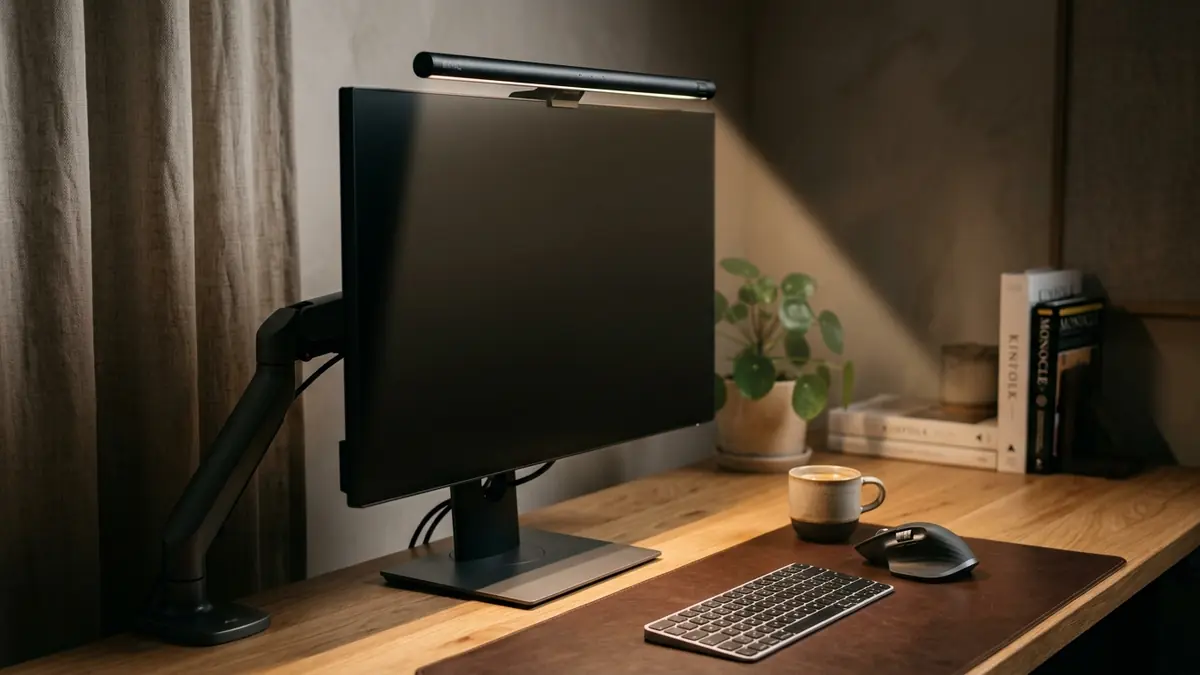
The human eye naturally rests at an angle of 10° to 15° below the horizontal line of sight. Positioning the top 1 inch of your monitor bezel level with your seated eye line ensures your neck remains upright (cervical spine neutral) while allowing your eyes to scan down the screen naturally without dipping your chin.
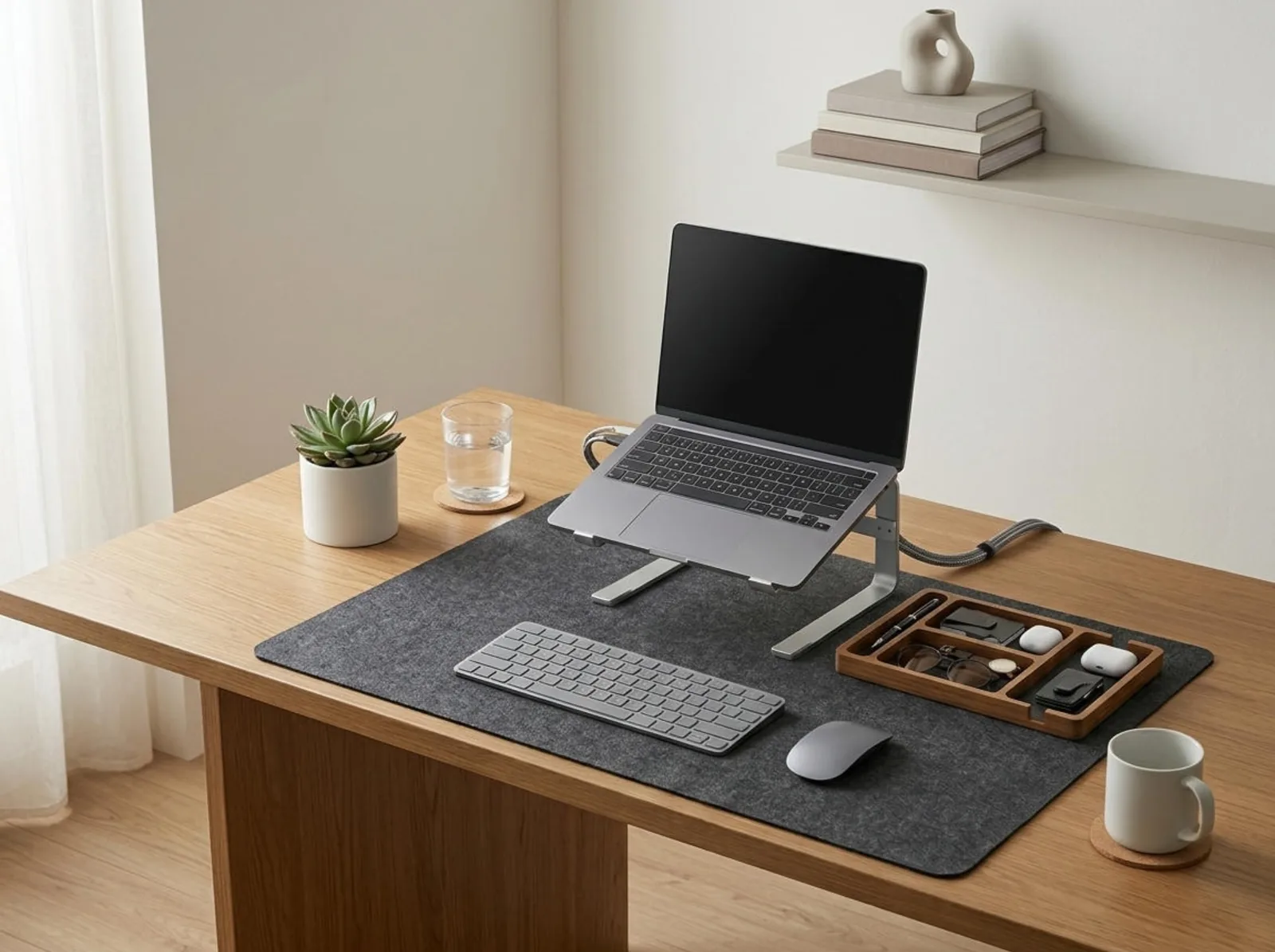
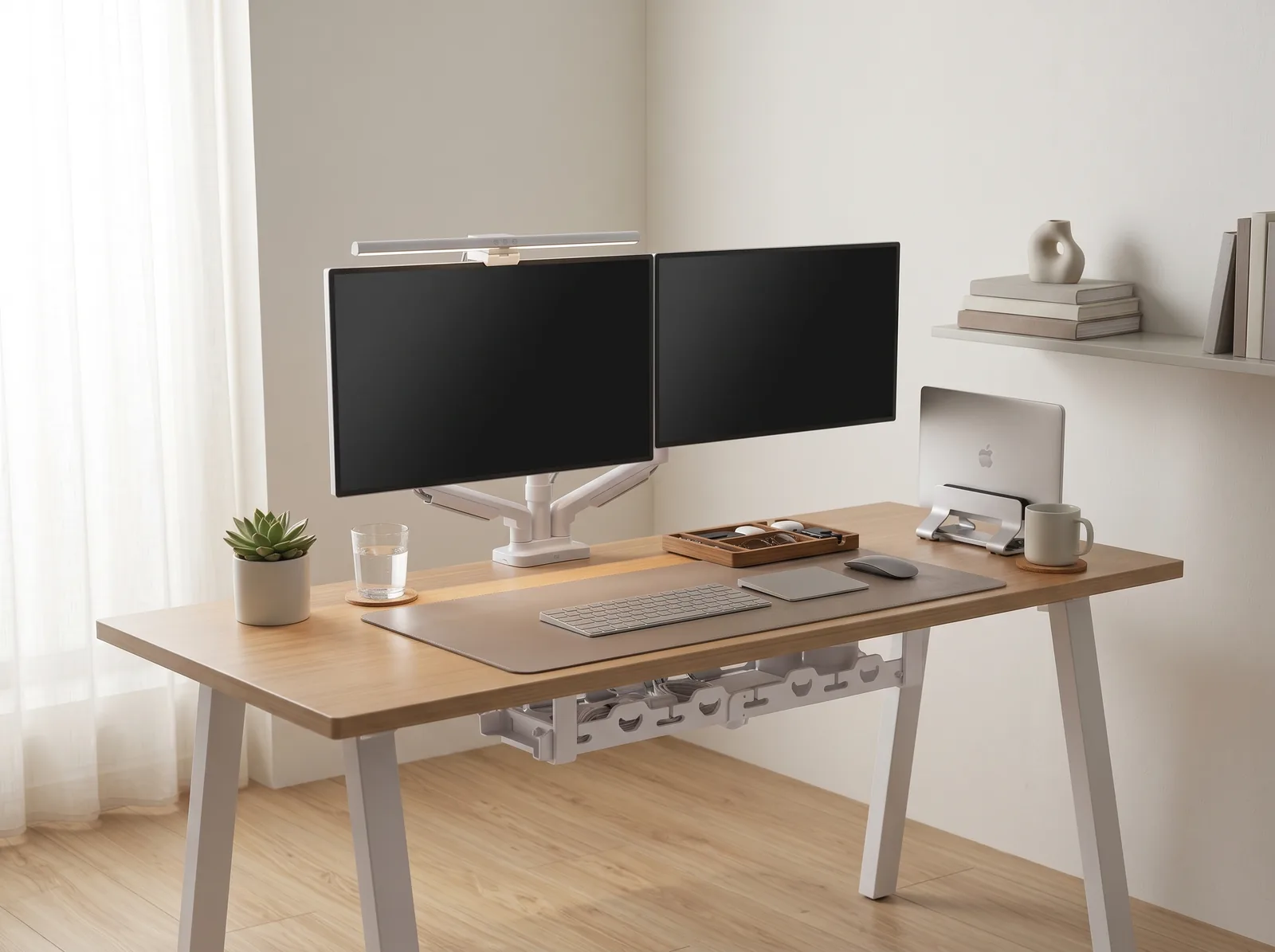
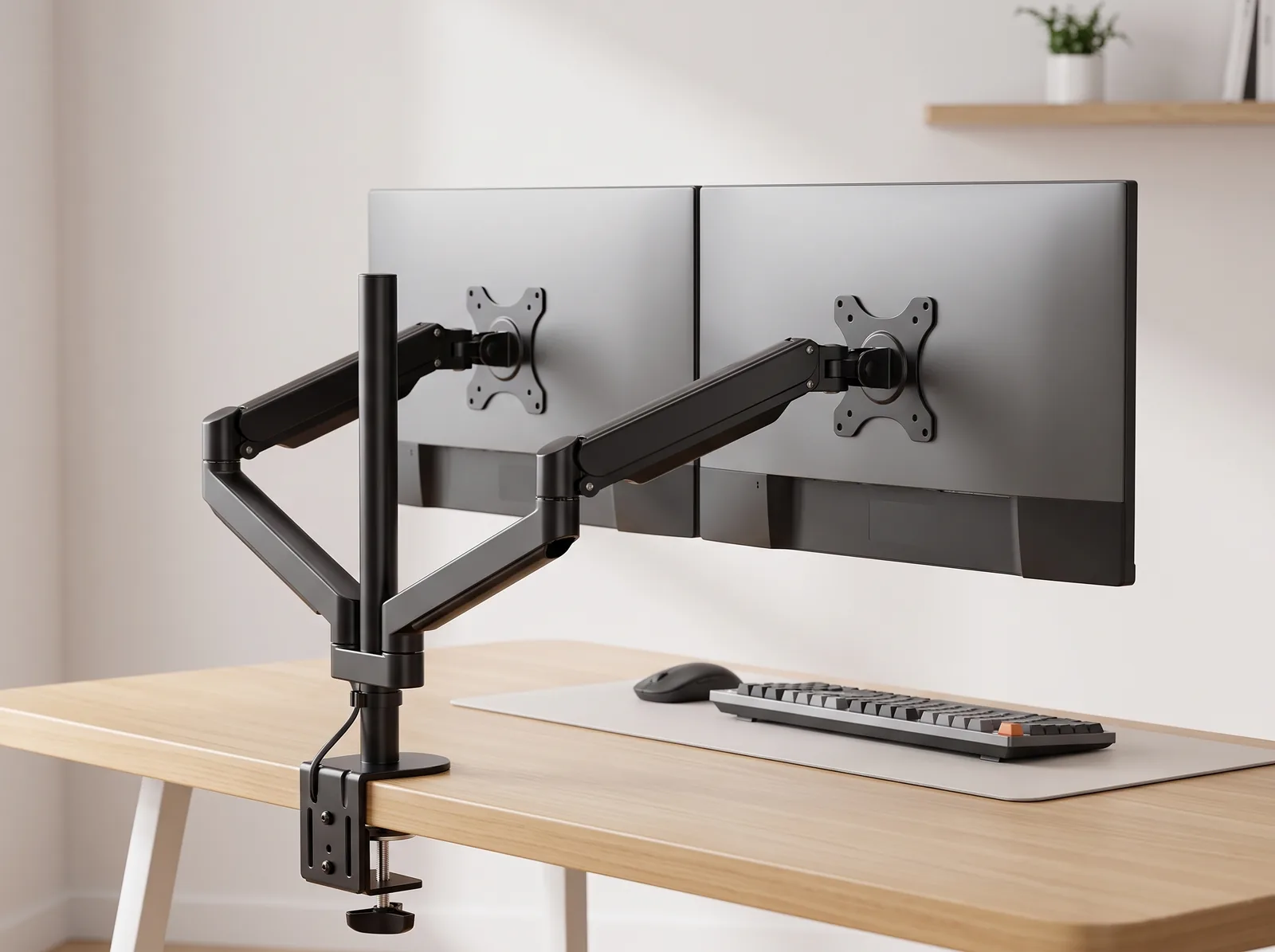
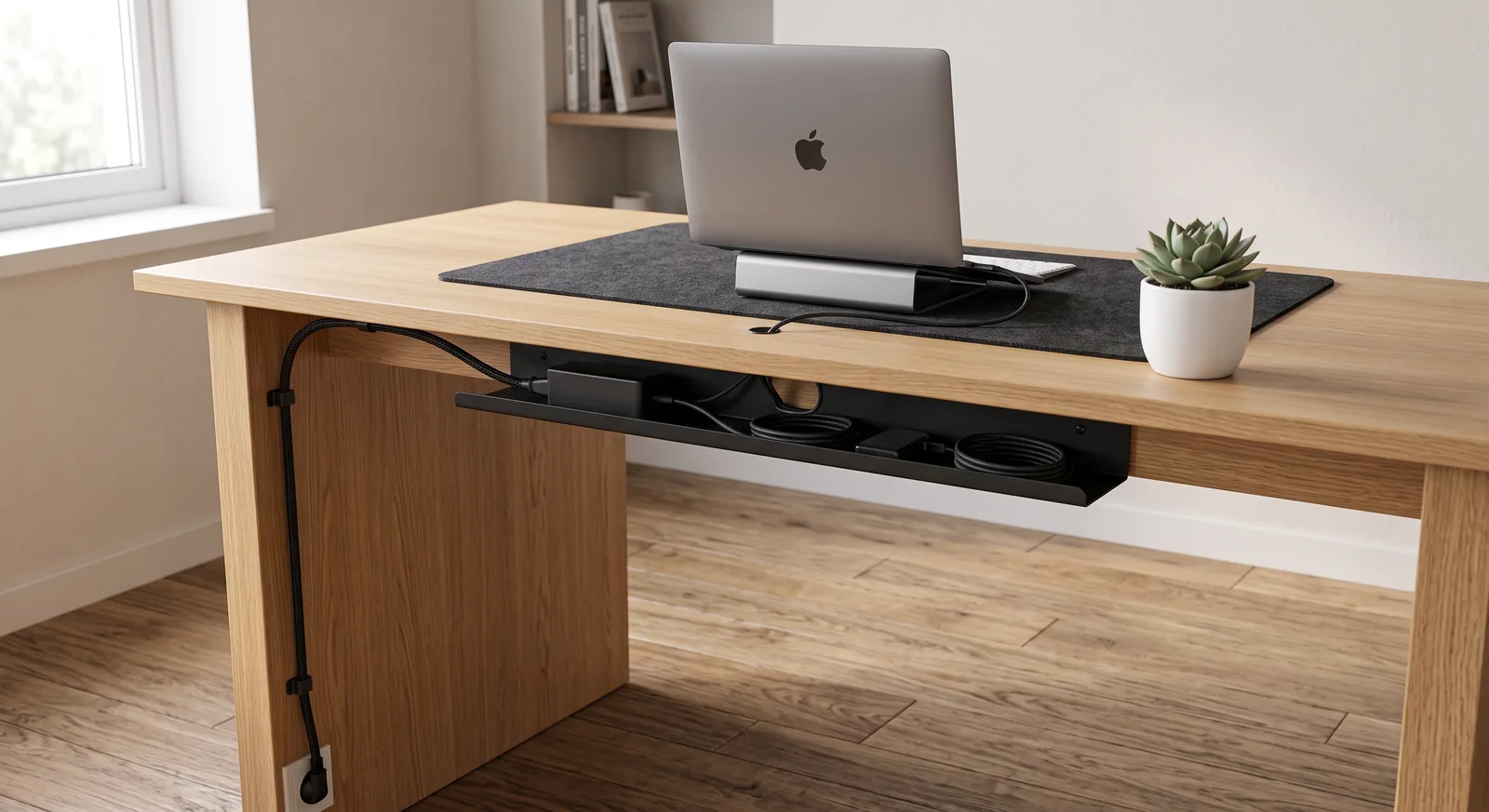
If you use a laptop as your primary screen, elevating it on an Ergonomic Aluminum Laptop Stand or mounting your external screen on an articulated Full-Motion Monitor Arm is essential to separate keyboard height from screen height.
4. Recommended Workstation Ecosystem
To implement these alignment benchmarks in a complete workspace, explore the Advanced Desk Setup Kit or read our comprehensive architectural pillar: Ergonomic Workstation Alignment: The Science-Backed Setup Guide.