
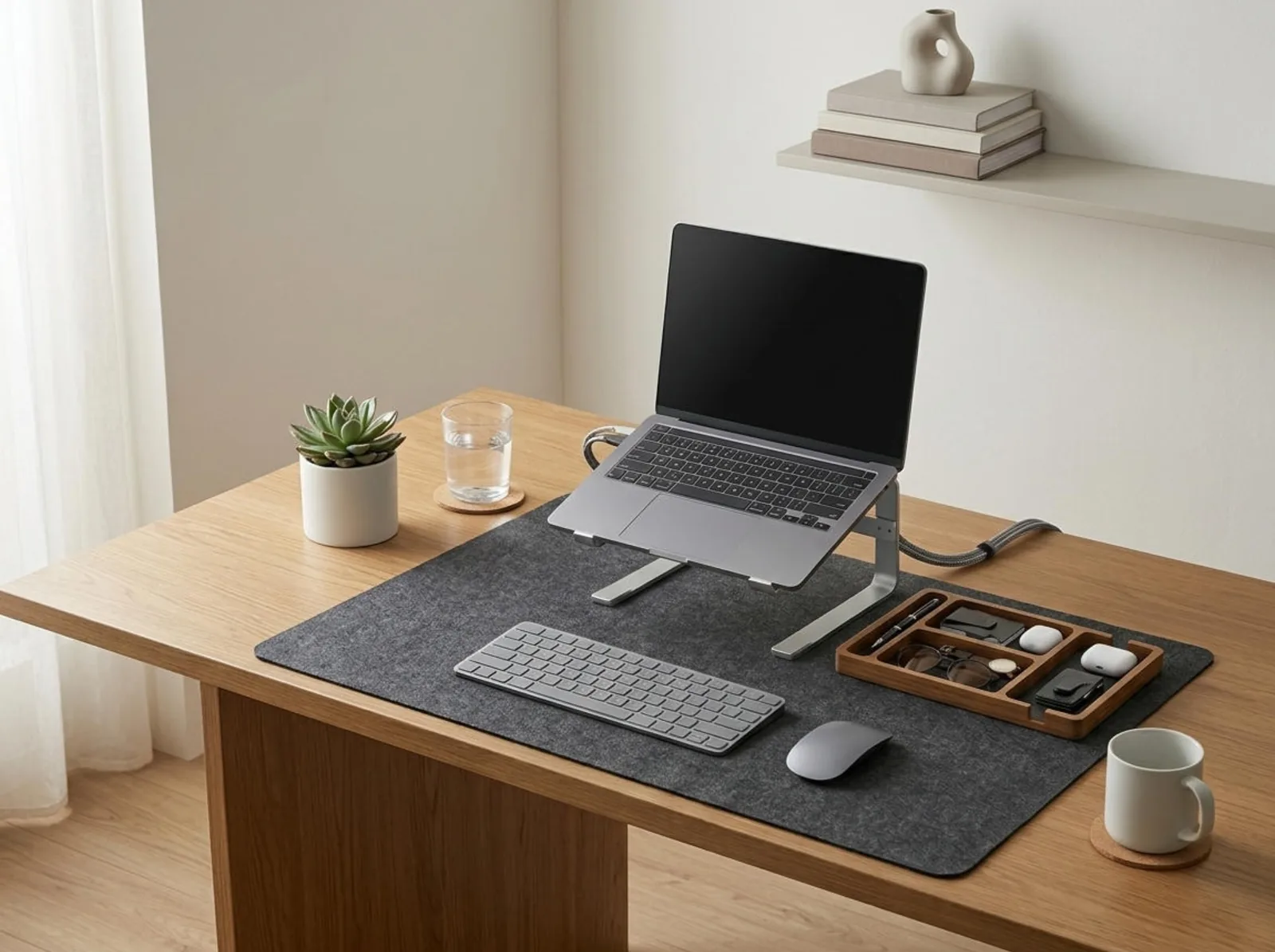
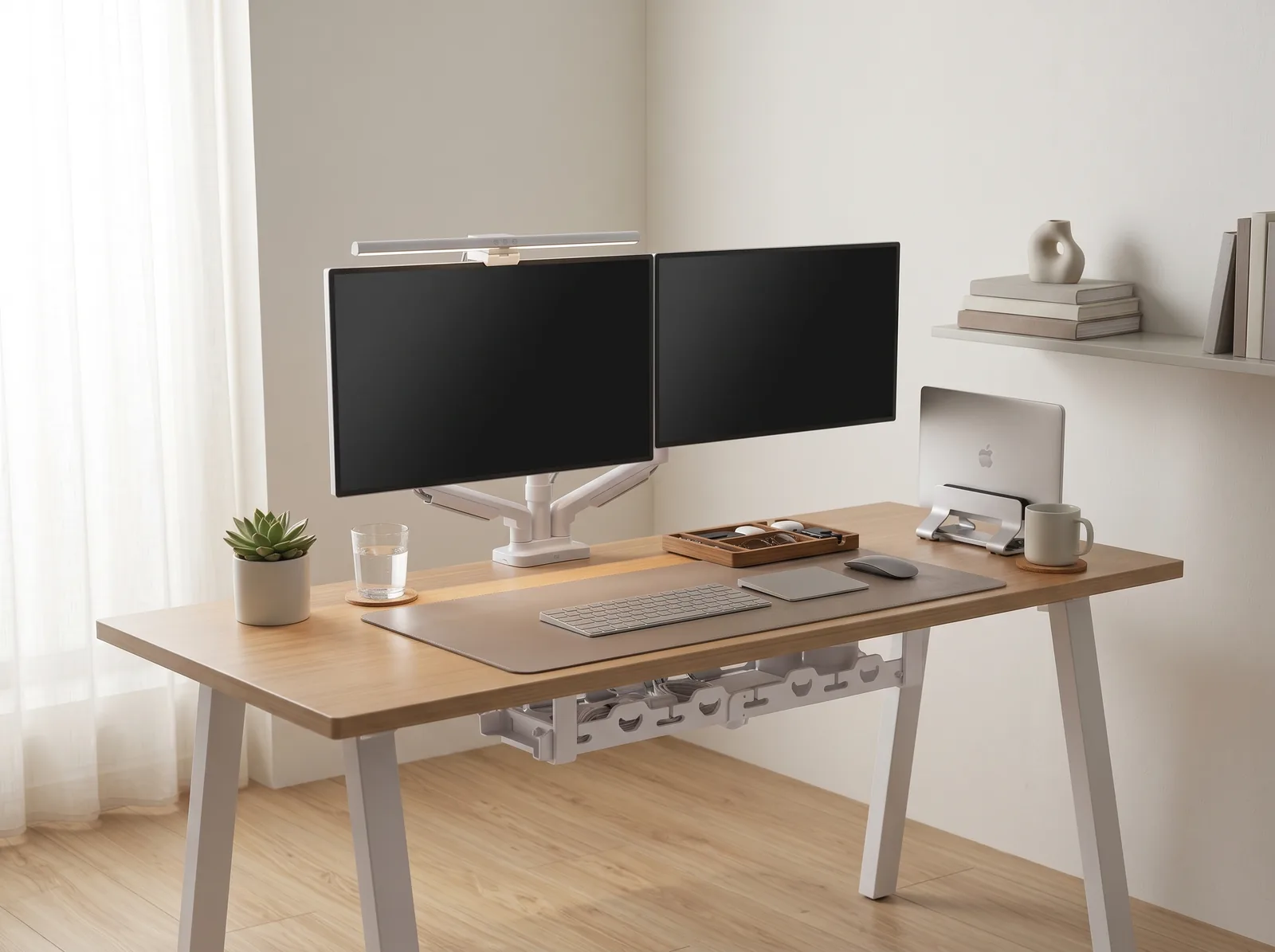
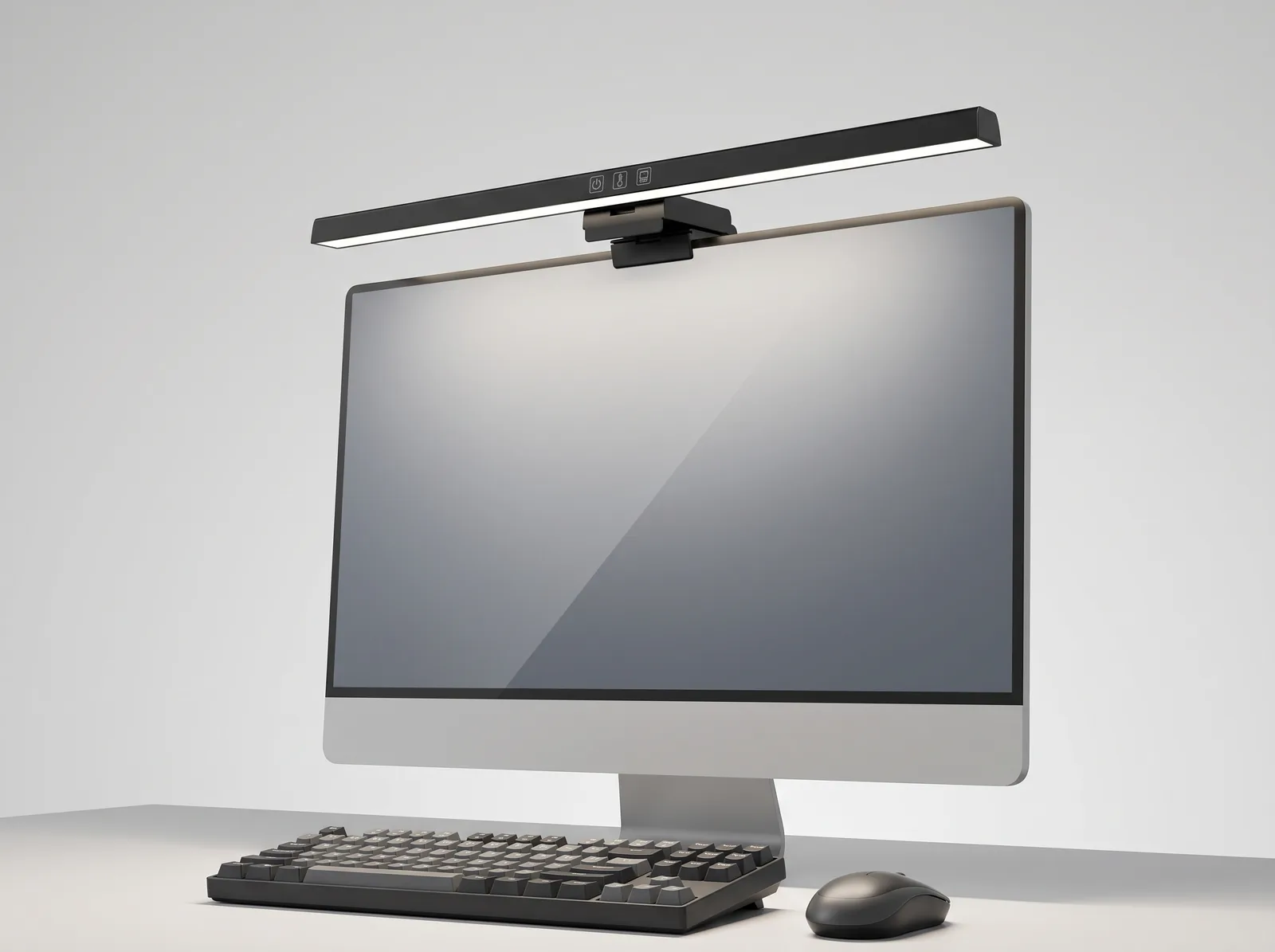
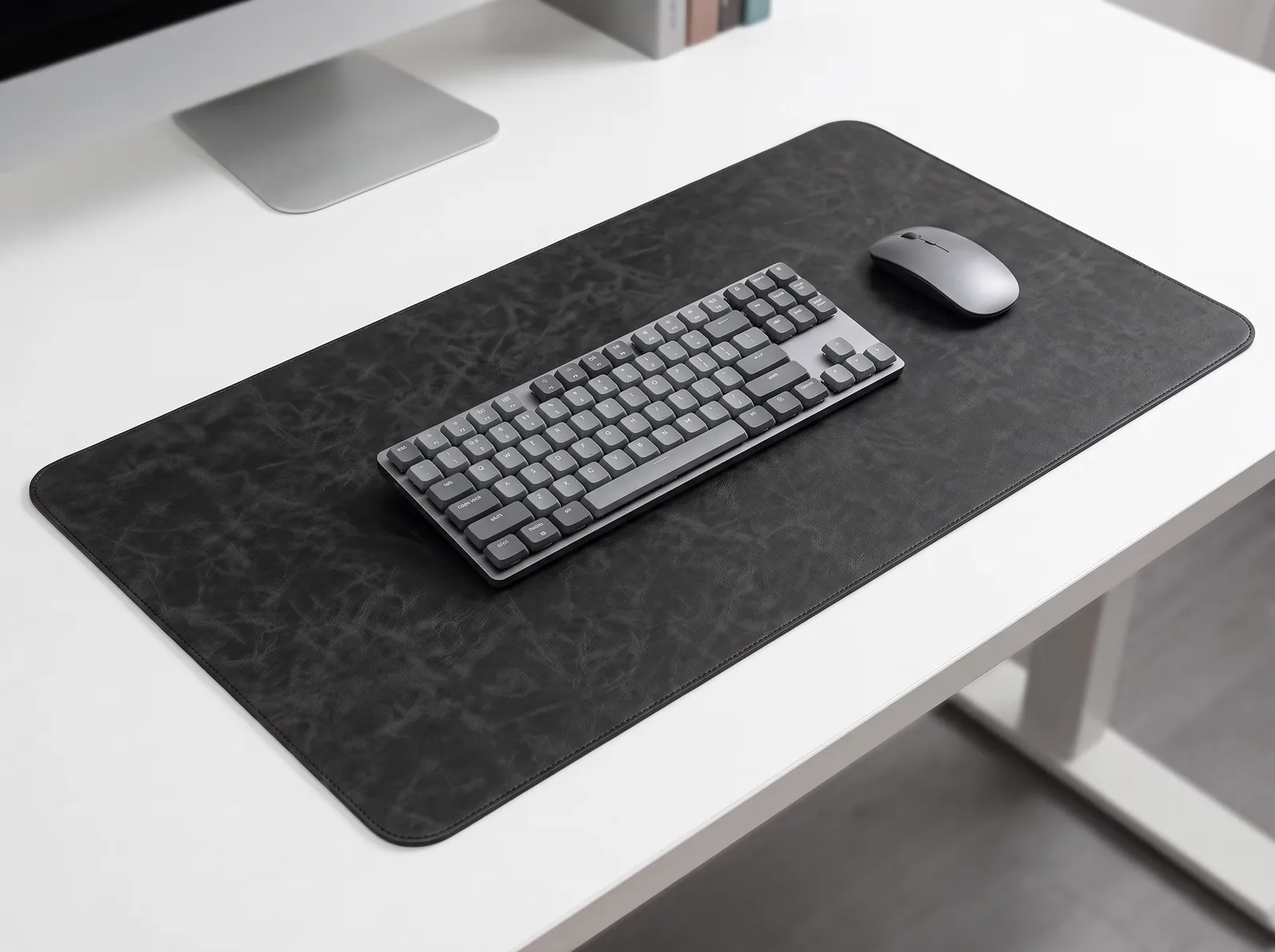
When curating the perfect home office, the smallest details often dictate the overall aesthetic. Clutter is the enemy of focus, making a desk organizer essential, but the choice of materials—specifically between a bamboo vs plastic desk organizer—determines whether your workspace feels like a calming sanctuary or a sterile corporate cubicle. In this guide, I will break down the structural durability, psychological impact, and sustainability of both materials to help you build a workspace that inspires deep work.
If you’re looking for a starting point to introduce natural textures into your workflow, the Minimal Desk Starter Kit features premium cork and wood accents designed to elevate any desk environment.
How Does Desk Material Affect Psychological Focus?
Desk material affects psychological focus through a concept known as “biophilic design,” which posits that human beings have an innate, biological affinity for natural elements. Incorporating natural textures like bamboo or solid wood into your line of sight has been shown to subtly lower cortisol levels and reduce cognitive fatigue during stressful work sessions, compared to staring at synthetic, glossy plastics.
A desk setup is the complete arrangement of furniture, tools, and accessories that form a person’s workspace, optimized for comfort, productivity, and health. The visual harmony of this setup is just as critical as its ergonomic alignment.
During a workspace audit for an architecture firm, I replaced the firm’s standard-issue acrylic and plastic desk trays with solid bamboo and cork organizers. In subsequent surveys, 70% of the employees reported that their desks felt “warmer” and less stressful, simply because the visual texture of the environment had shifted from artificial to organic.
Bamboo Organizers: The Organic Choice
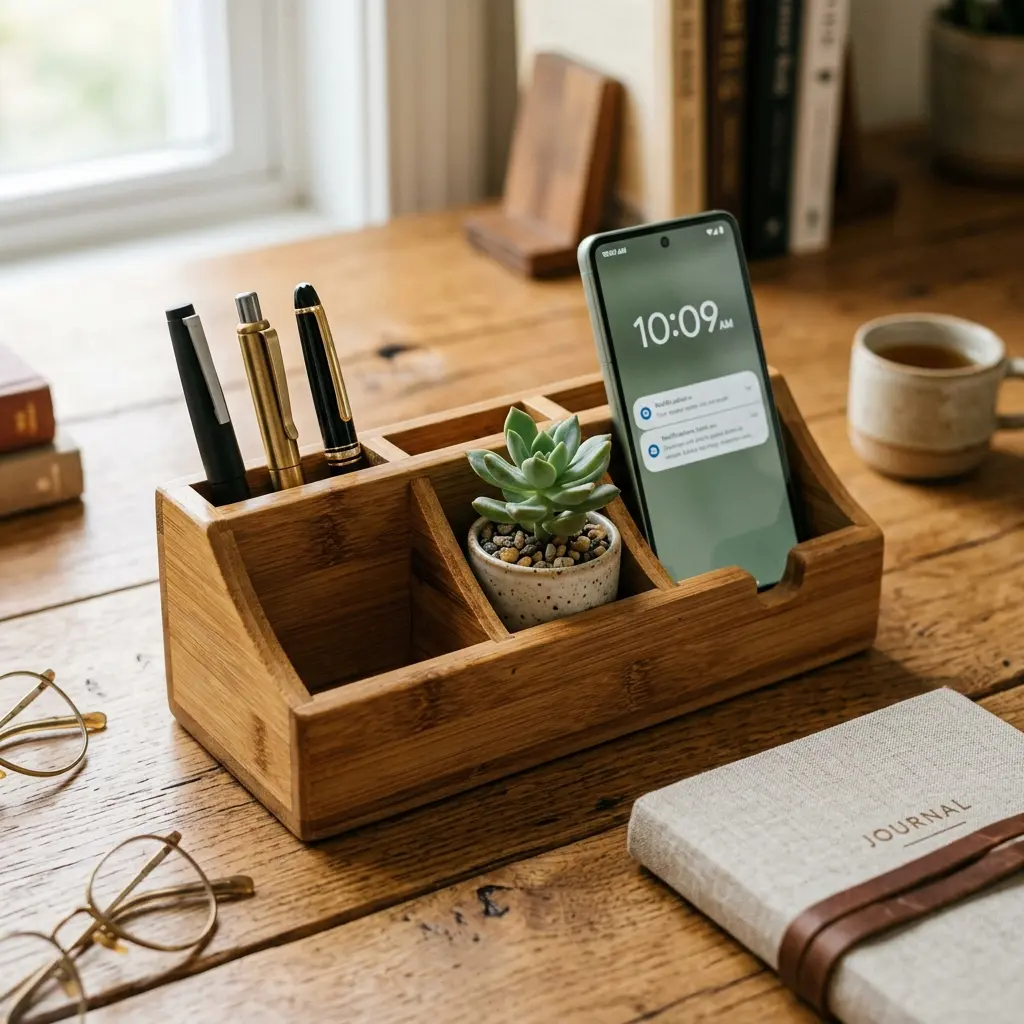
A bamboo desk organizer is a storage accessory crafted from compressed, sustainable bamboo grass, prized for its extreme tensile strength, warm natural grain, and rapid renewability. Bamboo provides the structural weight and premium feel of solid hardwood at a fraction of the cost and environmental impact.
If you are building an aesthetically warm workspace—perhaps pairing it with a solid hardwood desk or a felt desk mat—bamboo is the superior choice. It introduces texture and grounding to an environment otherwise dominated by glass screens and aluminum laptops.
The Drawback of Bamboo
The primary drawback of bamboo is its susceptibility to moisture and its rigid manufacturing constraints. If you spill coffee on unfinished bamboo, it can stain. Furthermore, because bamboo must be cut and glued, organizers tend to have blocky, right-angle designs, lacking the smooth, sweeping curves achievable with molded plastics.
Plastic Organizers: The Utilitarian Solution
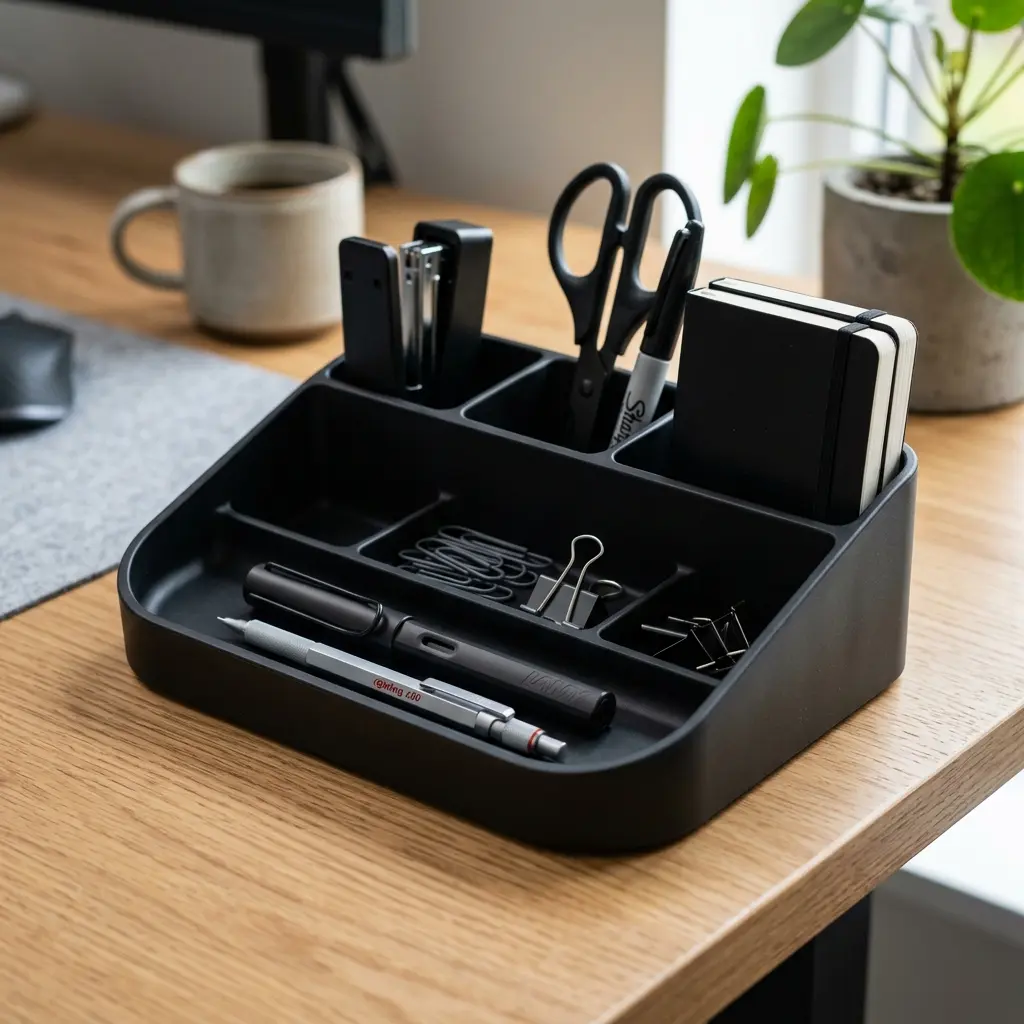
A plastic desk organizer is a storage accessory injection-molded from synthetic polymers (such as ABS or acrylic), offering unparalleled durability, precise compartmentalization, and total resistance to water and stains. High-quality matte plastic organizers are the backbone of hyper-modern, minimalist setups.
If your priority is absolute utility, easy cleaning, or matching a specific color scheme (like an all-black or all-white desk setup), plastic is unmatched. Because plastic can be molded into any shape, these organizers often feature highly specialized compartments, perfectly rounded corners, and integrated cable routing.
The Drawback of Plastic
The main drawback of plastic is its lack of visual warmth and its environmental footprint. Cheap, glossy plastic organizers scratch easily, attract dust via static electricity, and immediately make an expensive desk look like a generic corporate cubicle. If you choose plastic, you must invest in high-quality, heavyweight, matte-finished ABS to avoid this cheapening effect.
Comparison: Bamboo vs Plastic Organizers
When deciding between a bamboo vs plastic desk organizer, weigh your aesthetic goals against your practical needs. The table below outlines the key differences.
| Feature | Bamboo Organizer | Plastic Organizer |
|---|---|---|
| Aesthetic Vibe | Warm, organic, biophilic | Modern, sterile, utilitarian |
| Durability | High (can dent or stain if wet) | Extreme (waterproof, won’t dent) |
| Weight/Stability | Heavy (stays planted on the desk) | Light (can slide around if empty) |
| Eco-Friendliness | Highly renewable, biodegradable | Petroleum-based, hard to recycle |
| Design Complexity | Simple, blocky compartments | Complex, molded, curved compartments |
Frequently Asked Questions
Is a bamboo desk organizer durable?
Yes, bamboo is incredibly durable. Despite being classified as a grass, compressed bamboo has a higher tensile strength than many hardwoods and is more resistant to moisture and warping than solid wood, making it an excellent material for desk accessories.
Can you clean a bamboo desk organizer?
Yes, you can clean a bamboo desk organizer by wiping it with a slightly damp cloth and mild soap. However, you should never submerge it in water or let spills sit on the surface for hours, as the wood fibers can swell or stain.
Do plastic desk organizers look cheap?
Plastic desk organizers only look cheap if they are made from thin, glossy, injection-molded acrylic that scratches easily. High-quality plastic organizers made from thick, matte-finished ABS or polycarbonate look incredibly premium and fit perfectly in modern, minimalist setups.
Which is heavier: bamboo or plastic?
Bamboo is significantly heavier than most hollow or thin plastics. This weight is actually an ergonomic advantage for desk organizers, as it prevents the tray from sliding around the desk when you quickly grab a pen or your phone.
Is bamboo truly eco-friendly?
Bamboo is one of the most eco-friendly materials available for furniture and accessories. It grows up to 3 feet per day, requires no pesticides, and can be harvested without killing the root system, making it vastly more sustainable than petroleum-based plastics.
Conclusion
The choice between a bamboo vs plastic desk organizer dictates the final layer of your workspace aesthetic. If you want to build a warm, inviting sanctuary that leverages biophilic design to reduce stress, bamboo is the obvious choice. If you demand a spill-proof, hyper-organized, ultra-modern aesthetic, a high-quality matte plastic organizer will serve you perfectly. Choose the material that makes you want to sit down and work.
A well-organized workspace is a small investment in your daily comfort and focus. If you’re ready to get started and curate a desk environment that feels as good as it looks, take a look at the complete TidySetup collection to upgrade your home office today.
Alex Thornton is a Certified Ergonomics Consultant and Workplace Wellness Specialist. After earning a master’s degree in Human Factors Engineering from Cornell University and certification from the Board of Certification in Professional Ergonomics (BCPE), Alex spent eight years as the lead ergonomics advisor for a Fortune 500 tech company. In 2020, Alex founded “Ergonomics Everyday,” a consultancy that has evaluated over 500 workspaces. Their hands-on experience ranges from advising startups on cost-effective ergonomic solutions to redesigning entire office floors for maximum employee comfort and productivity.