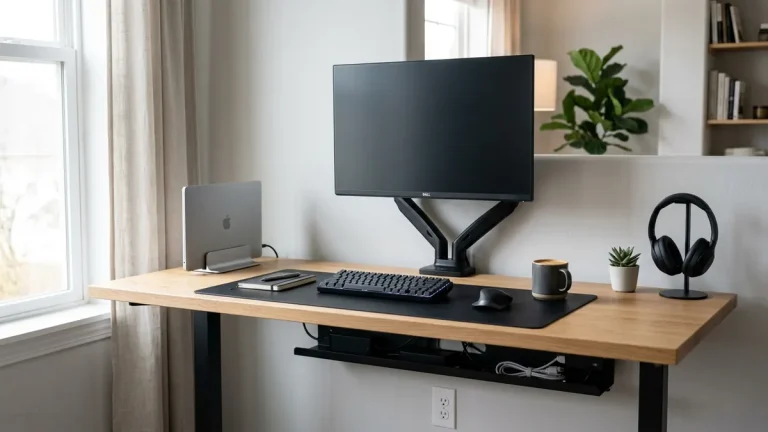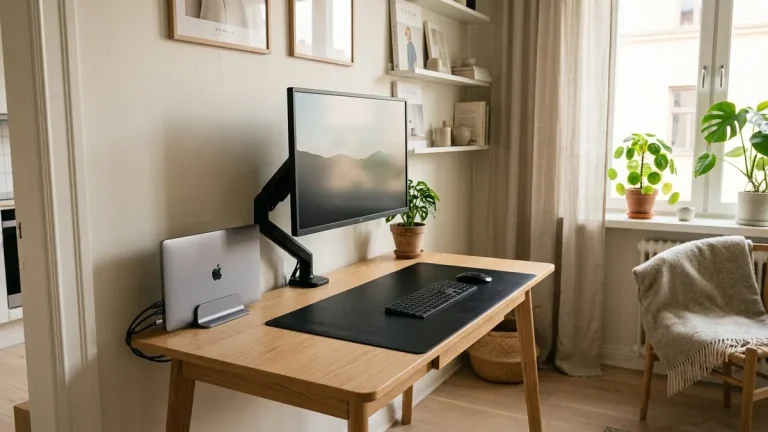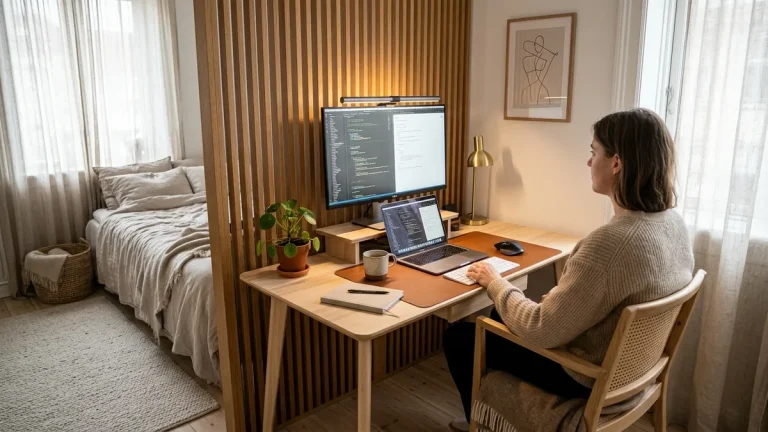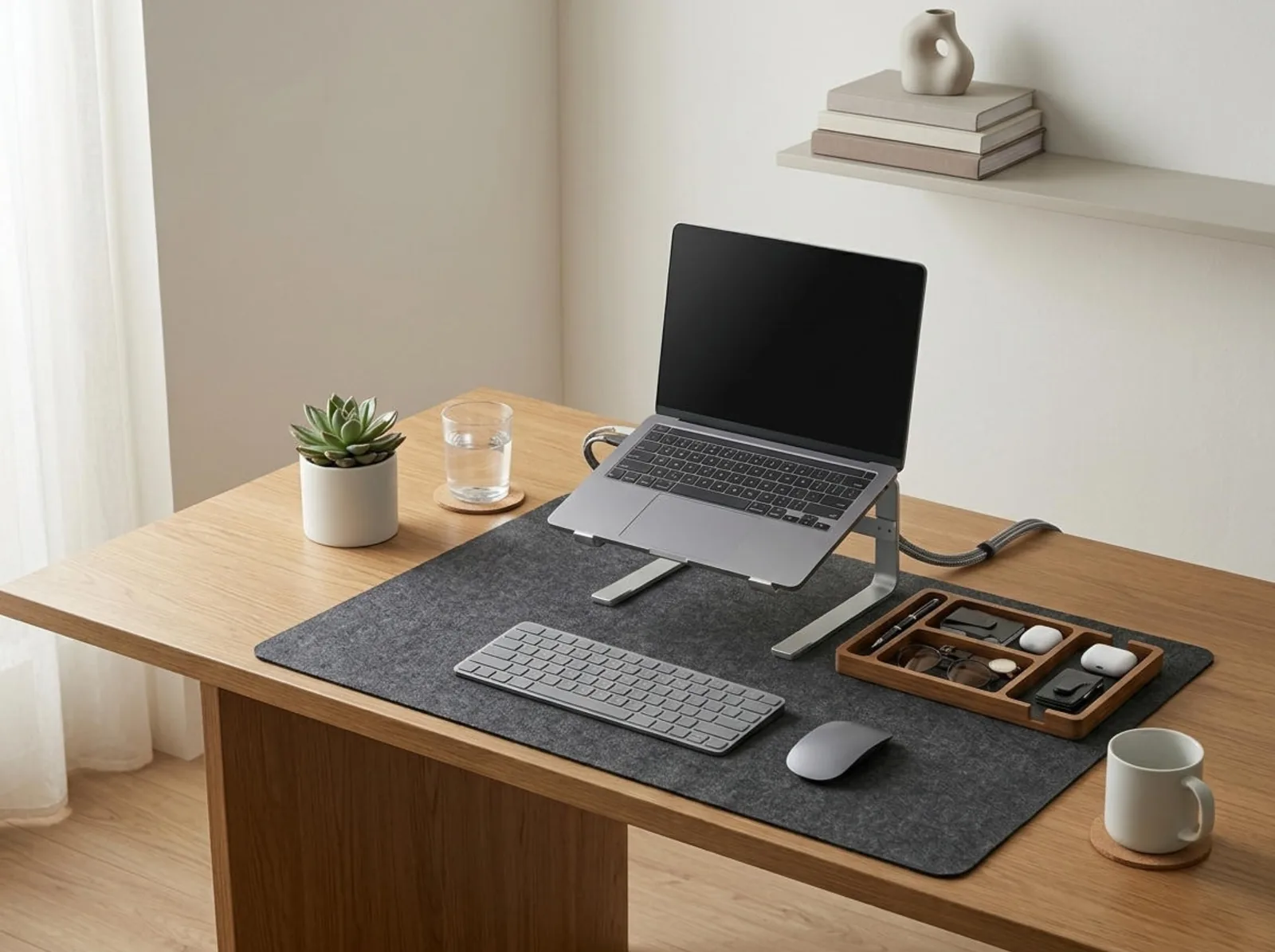
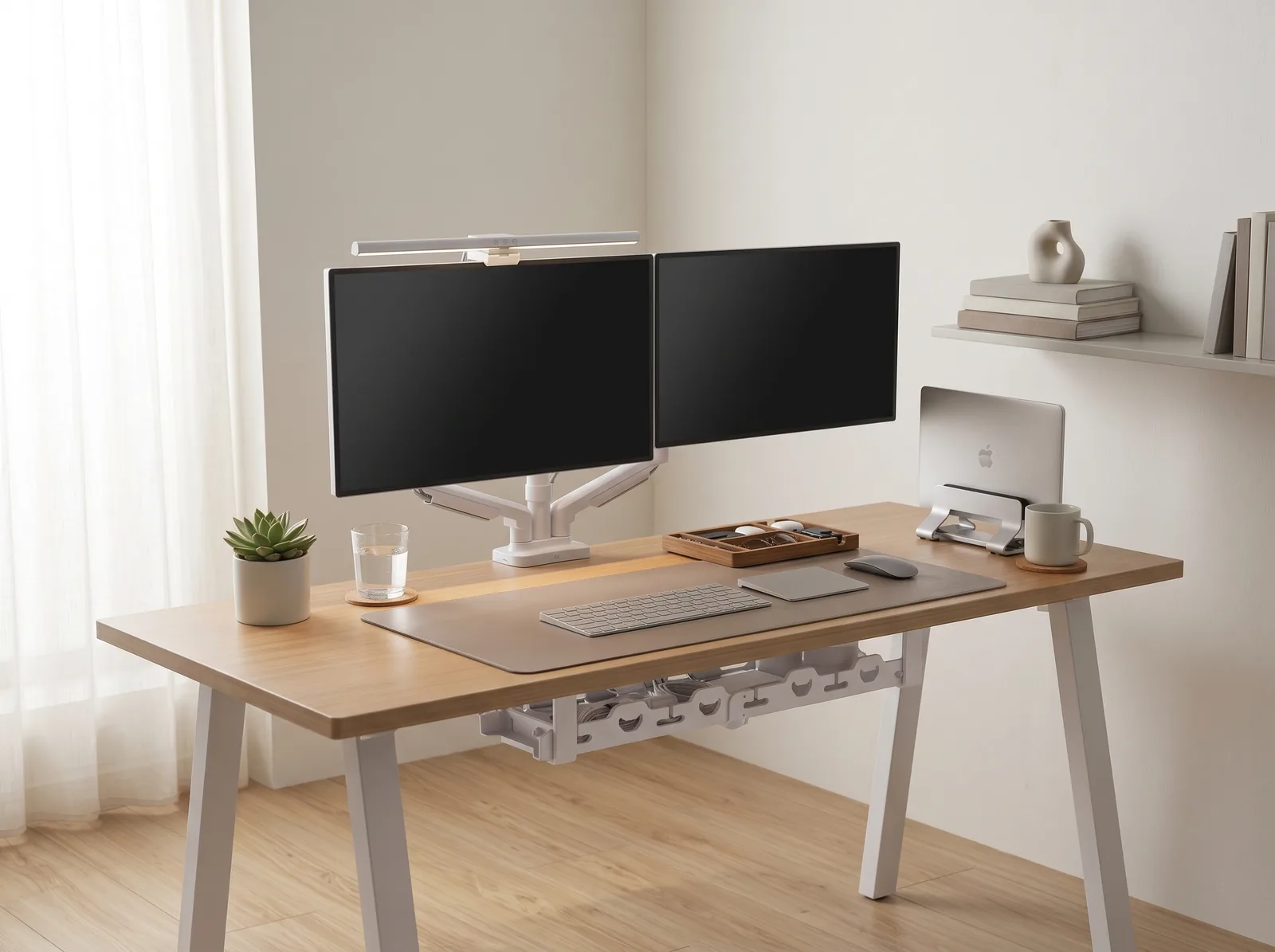
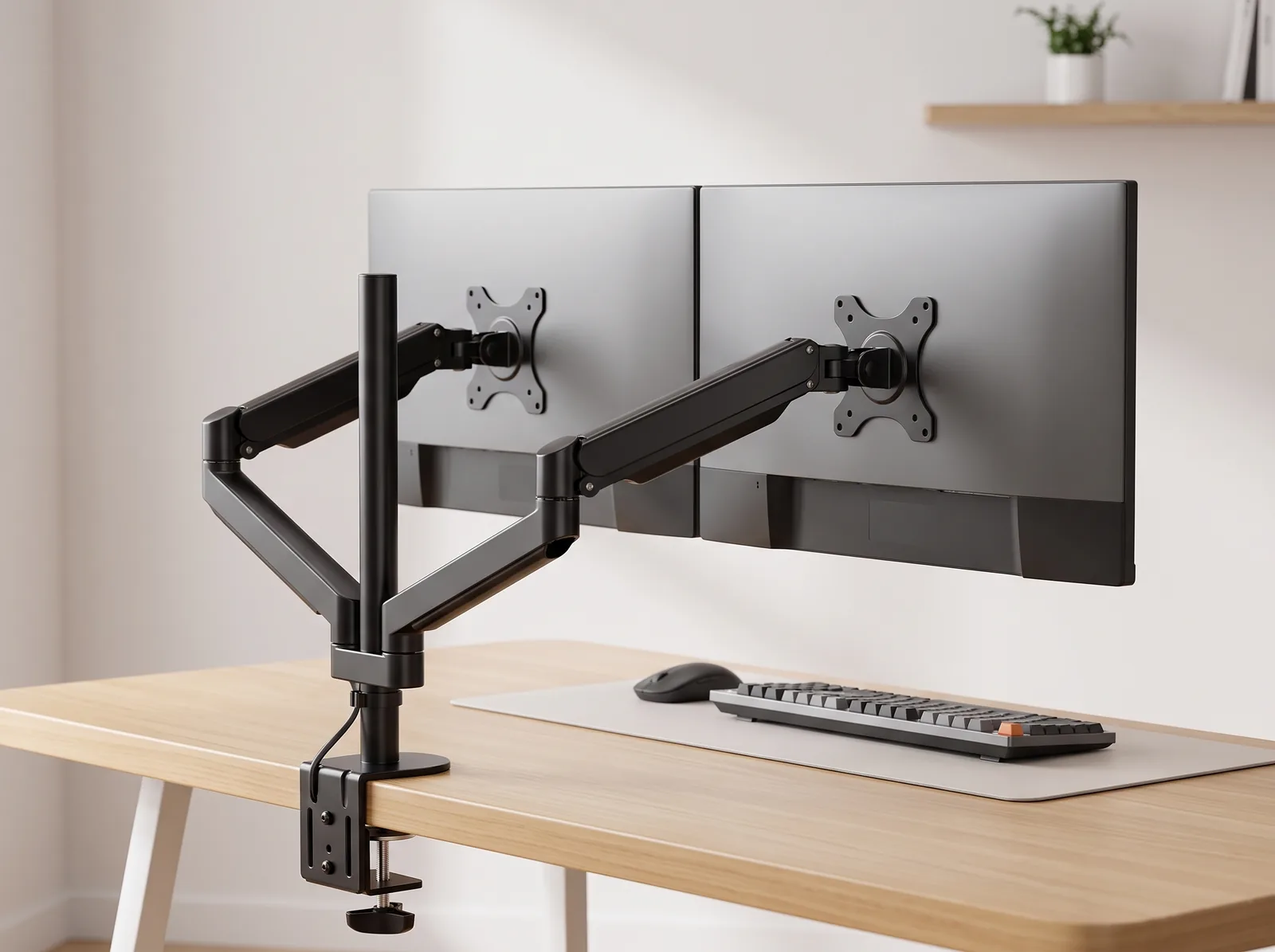
The shape of your desk fundamentally determines your workflow. Before spending hundreds on a new desk, you must ask: how do I actually work? Do I need multiple simultaneous workstations, or do I need a single focused surface? The L-shaped desk vs straight desk debate hinges entirely on this question.
L-Shaped Desks: Workflow Separation
Pros of L-Shaped
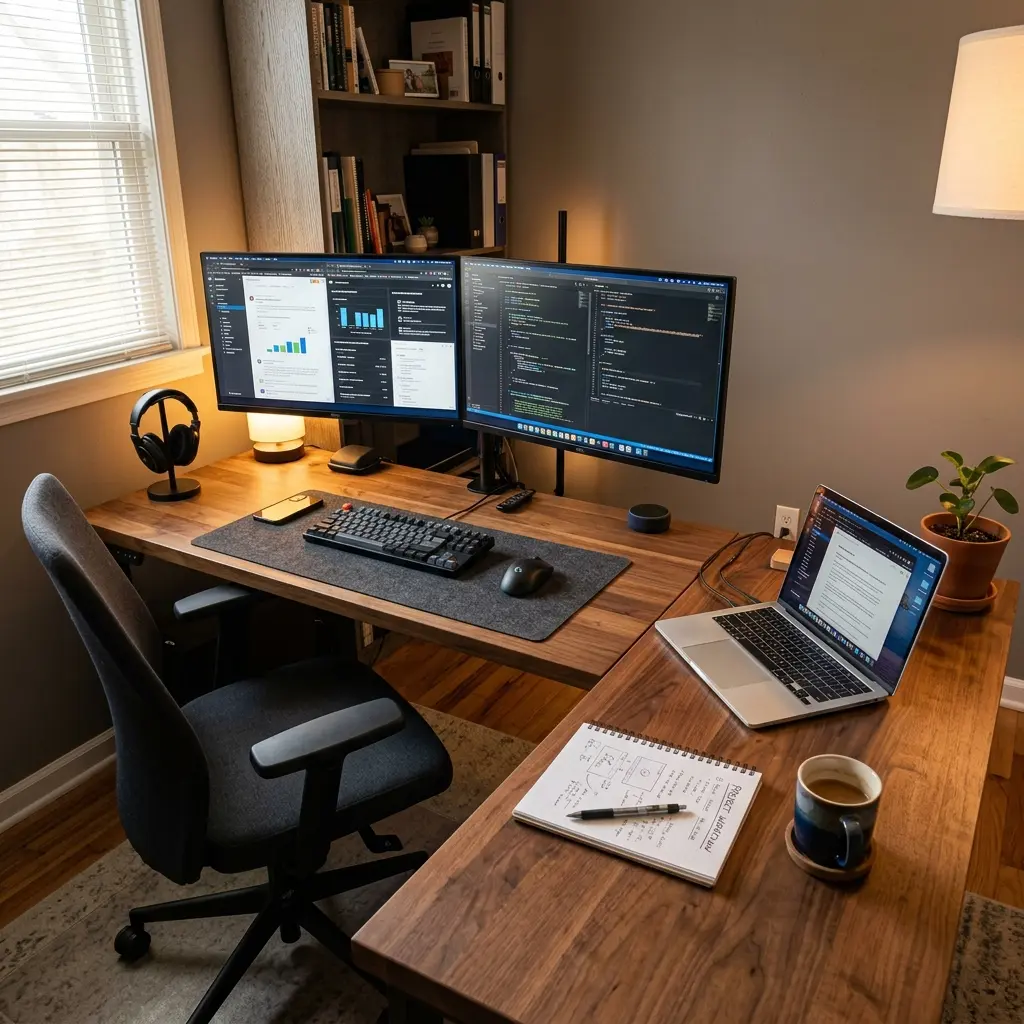
- Workflow Zone Separation — The primary benefit. The main wing holds your primary monitor and keyboard. The return wing becomes a dedicated secondary zone for reference materials, a secondary monitor, a drawing tablet, or a sketchpad. These zones remain physically separate, preventing clutter from one bleeding into the other.
- Corner Space Efficiency — In rooms where the corners are otherwise wasted, an L-shaped desk is an intelligent use of geometry. It fills a dead zone with functional workspace.
- Expansive Surface Area — An L-shaped desk typically provides 50–80% more total surface area than a straight desk of equivalent price, making it ideal for architects, video editors, and day traders who spread large physical materials across their work surface.
Cons of L-Shaped
- Room Commitment — An L-shaped desk is permanently oriented to a specific corner. If you rearrange the room, the desk rarely fits another configuration.
- Corner Ergonomics — The corner junction of an L-shaped desk is typically a dead zone—too close to reach into comfortably and too far to position a monitor directly in front of you. Many users waste this prime real estate.
Straight Desks: Focus and Simplicity
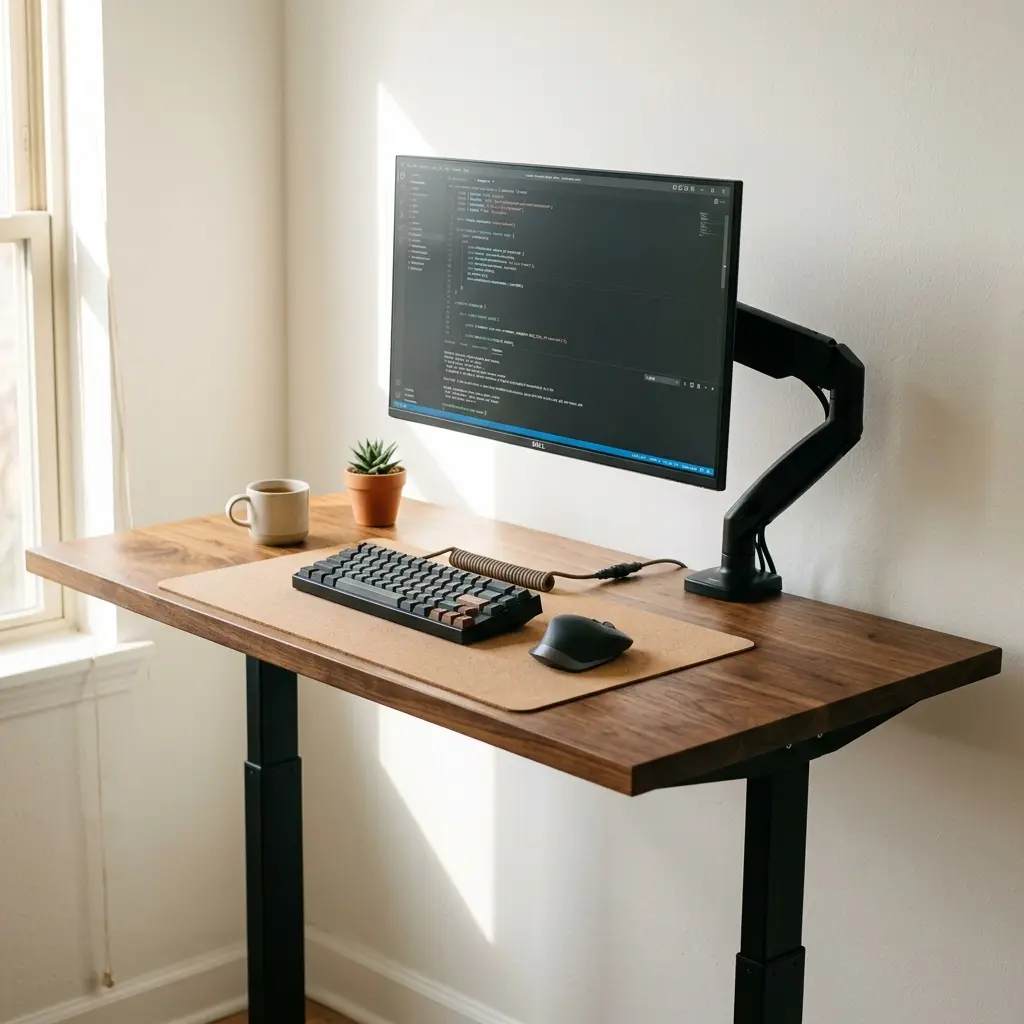
Pros of Straight
- Flexibility and Portability — A straight desk can be repositioned against any wall, in any room layout, facing any direction. This is invaluable for renters who move frequently.
- Premium Material Availability — The finest solid hardwood and premium standing desk tops are almost exclusively made in straight configurations. If you want a solid walnut desk, a straight top is your only practical option.
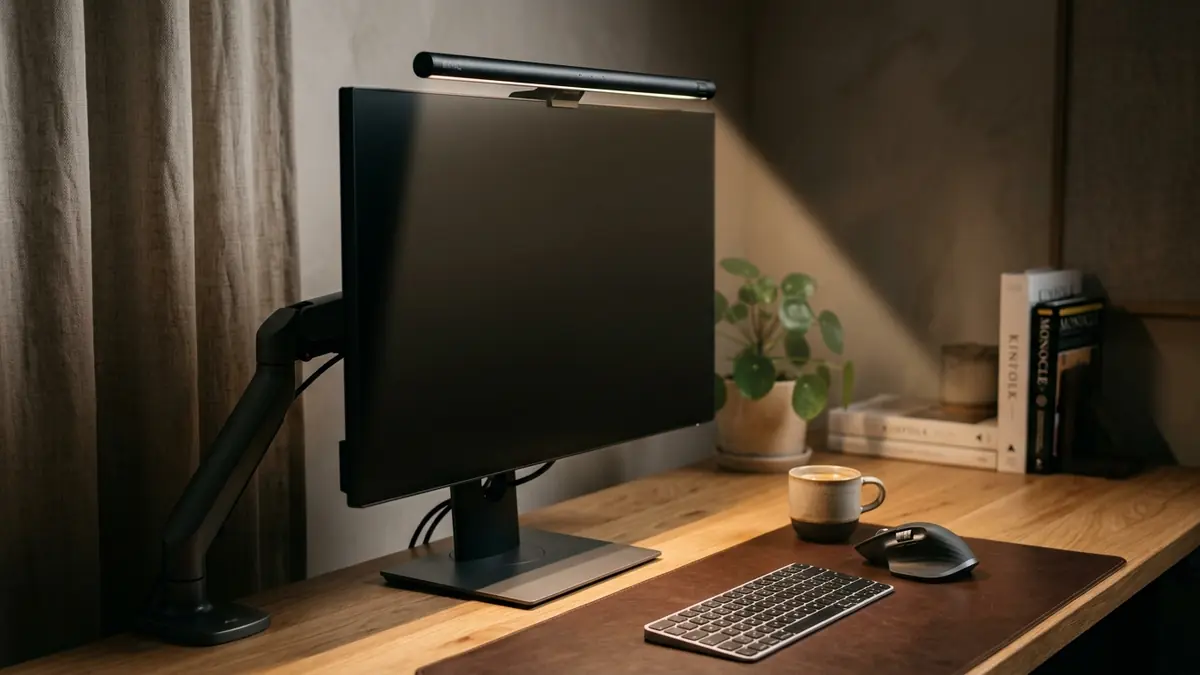
- Ergonomic Ideal — With a single primary focus point directly in front of you, a straight desk is ergonomically superior for single-screen work. There is no temptation to twist toward a return wing.
Cons of Straight
- Limited Surface Area — A standard 60×30-inch straight desk provides significantly less total workspace than even a modest L-shaped configuration.

The Verdict: Match the Desk Shape to Your Work Style
- Single-discipline work (writing, coding, design on one screen) → Straight desk. Less distraction, more focus, better materials available.
- Multi-discipline work (trading, video editing, architecture, reference-heavy research) → L-shaped desk. The physical zone separation is a genuine workflow advantage.
Whatever shape you choose, read our guide on single vs dual monitor productivity to decide how many screens your new desk should support.