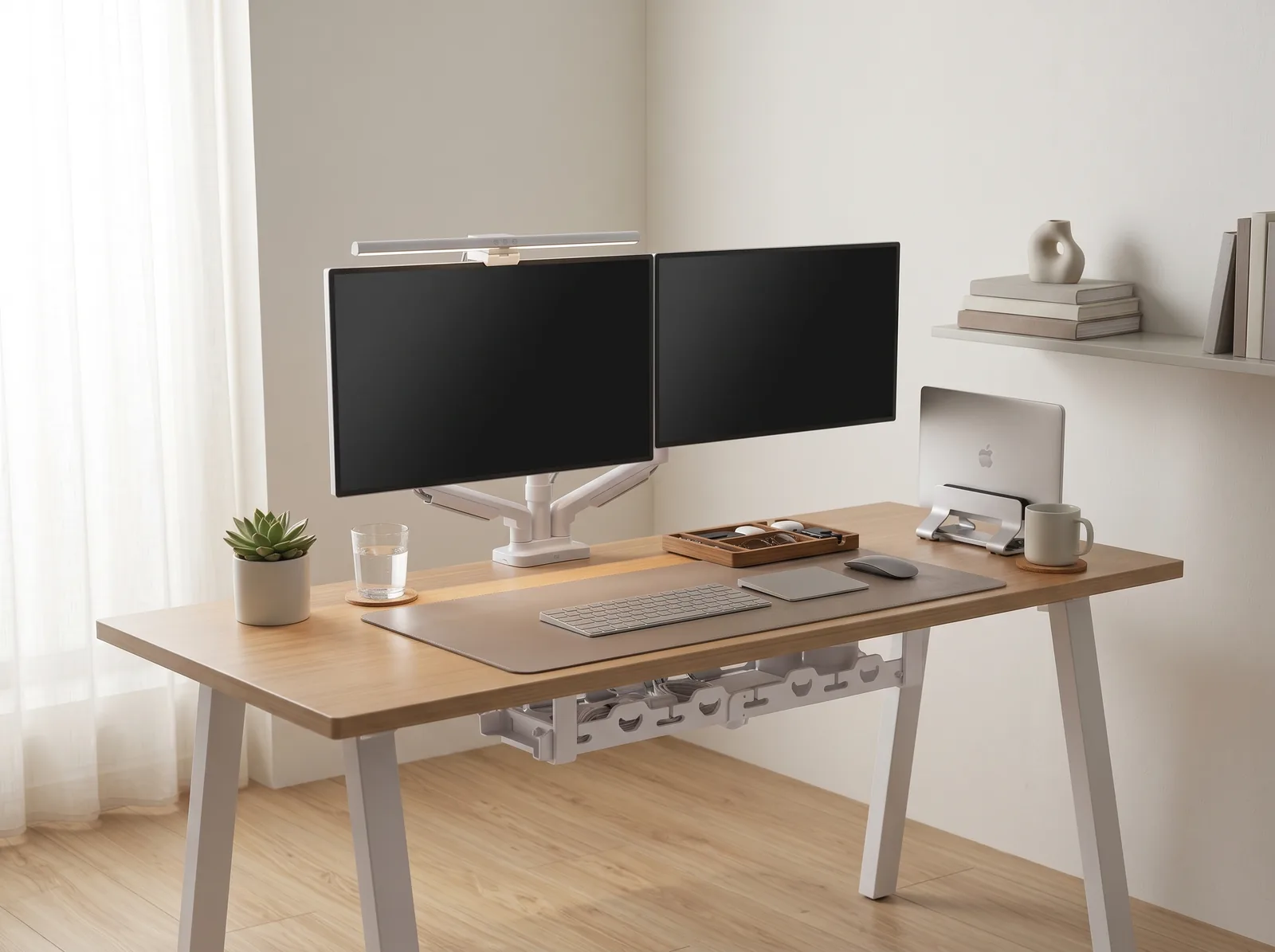
Even the most expensive ergonomic chair and motorized standing desk will fail to prevent cognitive burnout if your workspace is plagued by harsh overhead glare, jarring keyboard reverberations, and chaotic sensory stimuli. The solution is engineering comprehensive workspace environmental architecture that synchronizes circadian lighting, asymmetric task optics, acoustic dampening, and biophilic tactile materials into a unified sensory sanctuary. In this master blueprint, I will share the environmental psychology frameworks and physical calibration standards I have implemented across more than 400 executive audits to help you sustain effortless all-day focus.
If you want a turnkey foundation that unites display elevation, under-desk cable management, and tactile acoustic surface pads in a single cohesive system, explore the Advanced Desk Setup Kit.
What Is Workspace Environmental Architecture?
Workspace environmental architecture is the science of structuring the non-furniture environmental variables of a workstation—including light wavelength, specular glare, acoustic resonance, and tactile surface feedback—to support the human nervous system. Rather than treating a desk as an isolated mechanical station, environmental architecture treats the entire micro-climate as an active sensory interface that directly dictates hormonal balance and cognitive stamina.
Workspace productivity refers to the efficiency and output quality achieved through an intentionally designed and organized work environment.
Modern knowledge workers spend over 2,000 hours per year inside their desk micro-climates. When this environment is neglected, three severe sensory friction points arise:
- Circadian Phase Disruption: Exposure to static, high-kelvin blue light late in the afternoon suppresses melatonin synthesis, degrading REM sleep quality.
- Specular Glare & Ciliary Fatigue: Symmetrical overhead ceiling fixtures reflect off monitor glass, causing continuous pupil dilation stress and dry-eye symptoms.
- Acoustic Resonance & Auditory Distraction: Unpadded hard desk surfaces amplify mechanical switch clicks and vibration, increasing background cortisol levels.

Tier 1: Asymmetric Task Lighting & Glare Elimination
Task lighting is the primary optical layer of workspace environmental architecture. Standard ambient room fixtures create harsh specular glare on monitor glass, washing out visual contrast and forcing the eyes into continuous muscular squinting.
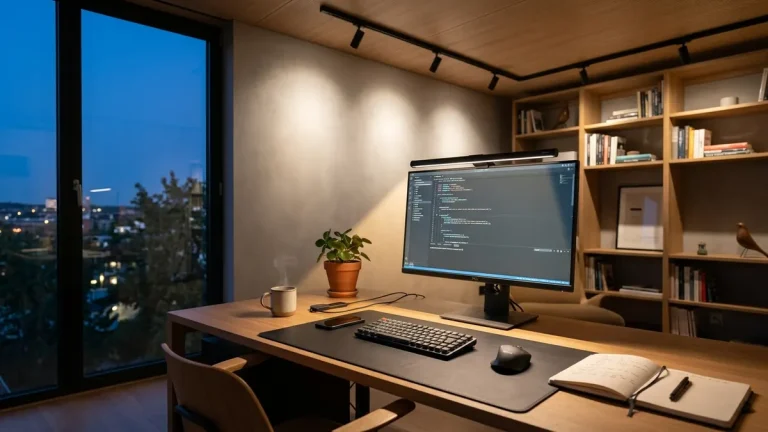
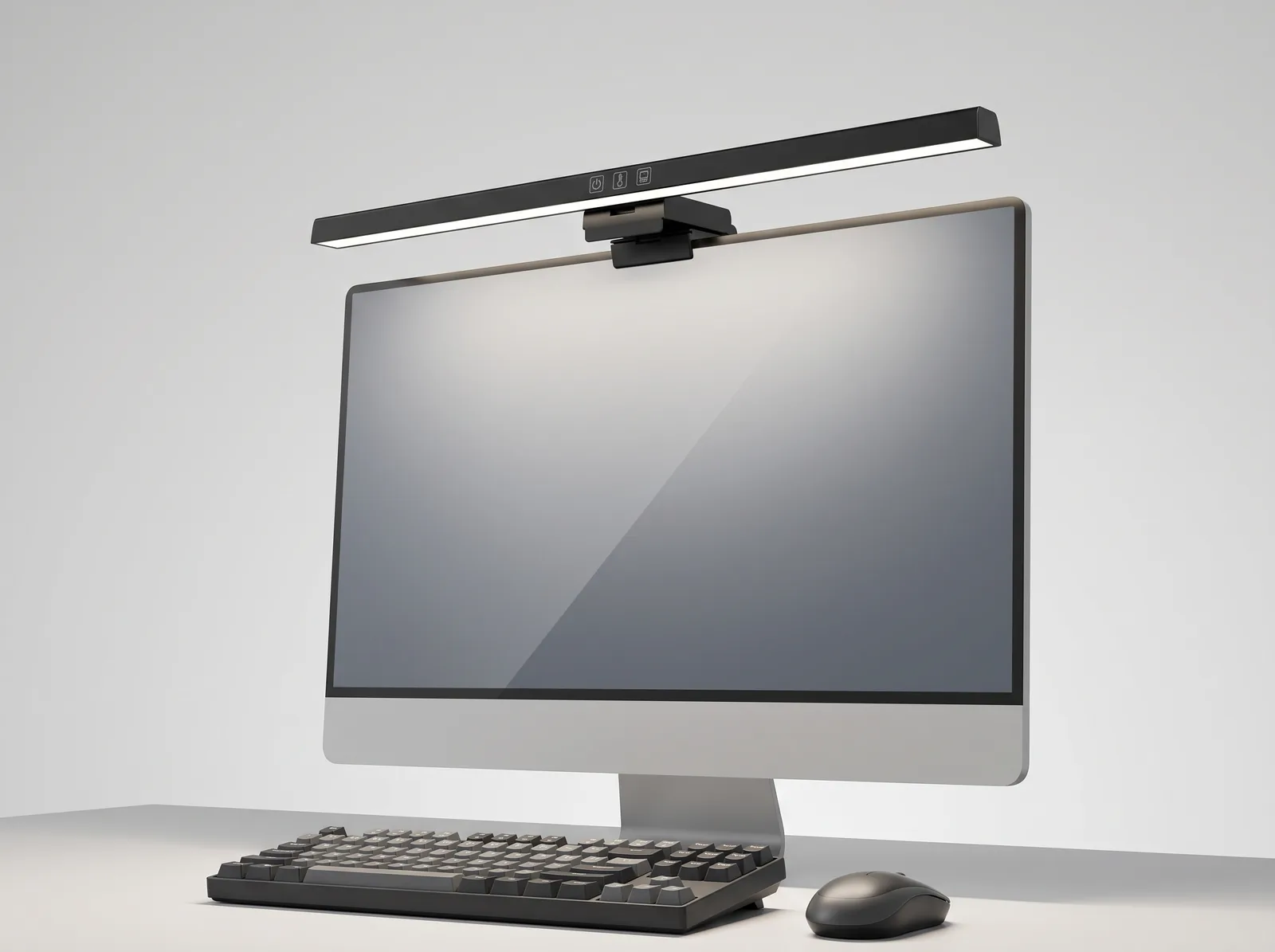
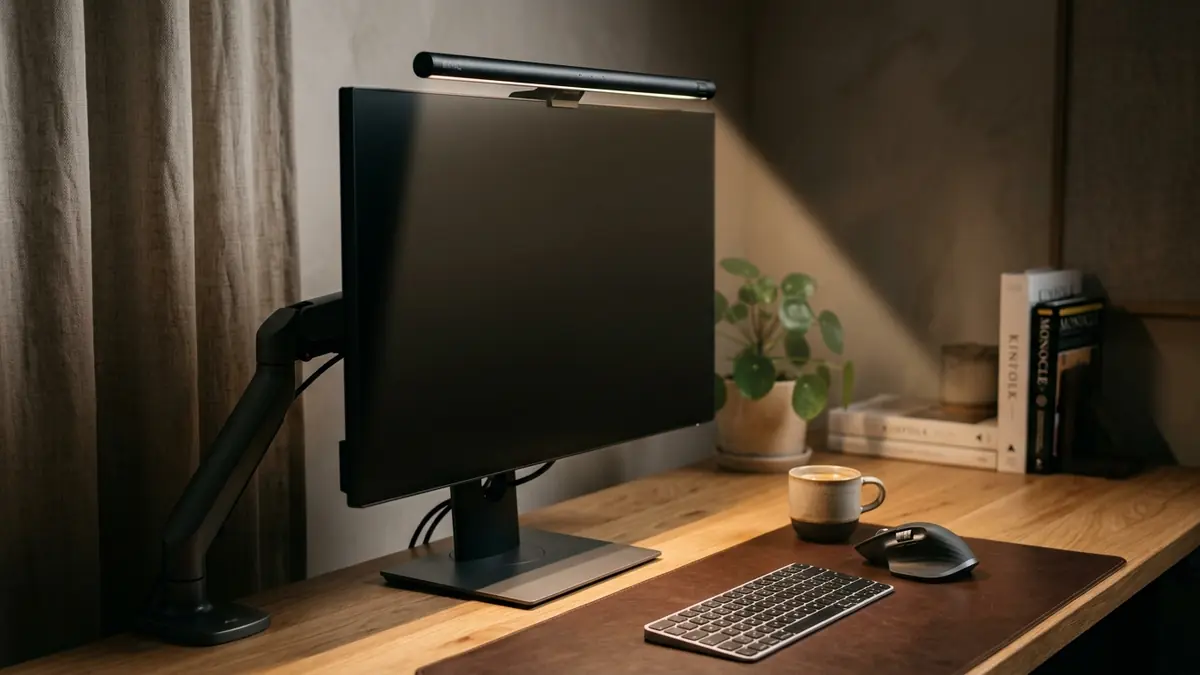
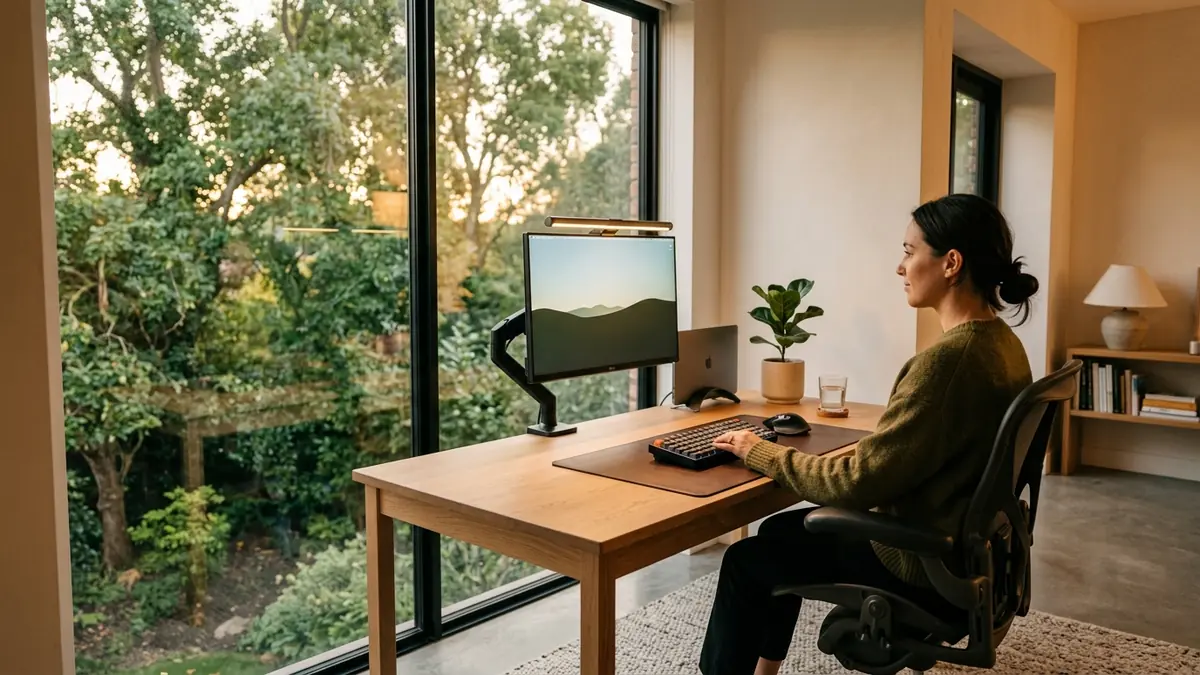
An asymmetric monitor light bar mounts atop display bezels to deliver forward-focused desk illumination without reflecting light off the screen glass or into the user’s eyes.
Mounting a precision 50cm Computer Monitor Light Bar atop your primary display solves this by utilizing custom-engineered optical lenses:
- 45-Degree Asymmetric Projection: Casts a defined triangular beam forward across your desk mat and keyboard while ensuring zero direct light strikes the display panel, adhering to EN 12464-1 workplace lighting standards for optical glare elimination (UGR < 19).
- High Color Rendering (CRI 95+): Emits full-spectrum balanced light that renders documents, notebooks, and physical materials with pristine fidelity.
- Zero-Footprint Mounting: Clips securely to the screen bezel, completely freeing up the 60+ square inches consumed by traditional table lamps.
Discover complete optical principles in our companion guide on anti-glare lighting to reduce eye fatigue.
Tier 2: Circadian Photobiology & Color Temperature Tuning
Human alertness and metabolic recovery are governed by the 24-hour solar cycle. According to circadian photobiology research from Harvard Medical School, working under static blue-enriched lighting late in the day suppresses melatonin and delays circadian phase timing by up to 90 minutes.
Circadian lighting protocols synchronize artificial color temperatures with the sun’s natural spectrum—shifting from energizing 6500K daylight at 9 AM down to calming 2700K warm light by 6 PM.
By adjusting the stepless touch controls on your 50cm Monitor Light Bar, you can align artificial illumination with natural biological rhythms:
| Time of Day | Color Temp (Kelvin) | Recommended Lux | Biological & Cognitive Goal |
|---|---|---|---|
| Morning (8:00 AM – 11:30 AM) | 5500K – 6500K (Cool Daylight) | 500 – 700 Lux | Suppresses melatonin; spikes cortisol for peak analytical focus |
| Afternoon (1:00 PM – 4:30 PM) | 4000K – 4500K (Balanced Neutral) | 400 – 500 Lux | Sustains steady focus while preventing afternoon eye burnout |
| Evening (5:00 PM – 8:00 PM+) | 2700K – 3000K (Warm Amber) | 200 – 300 Lux | Eliminates blue-light retinal stimulation; initiates melatonin |
Learn more about biological light cycles in our guide on circadian lighting workflows for remote professionals.
Tier 3: Acoustic Dampening & Tactile Resonance Absorption
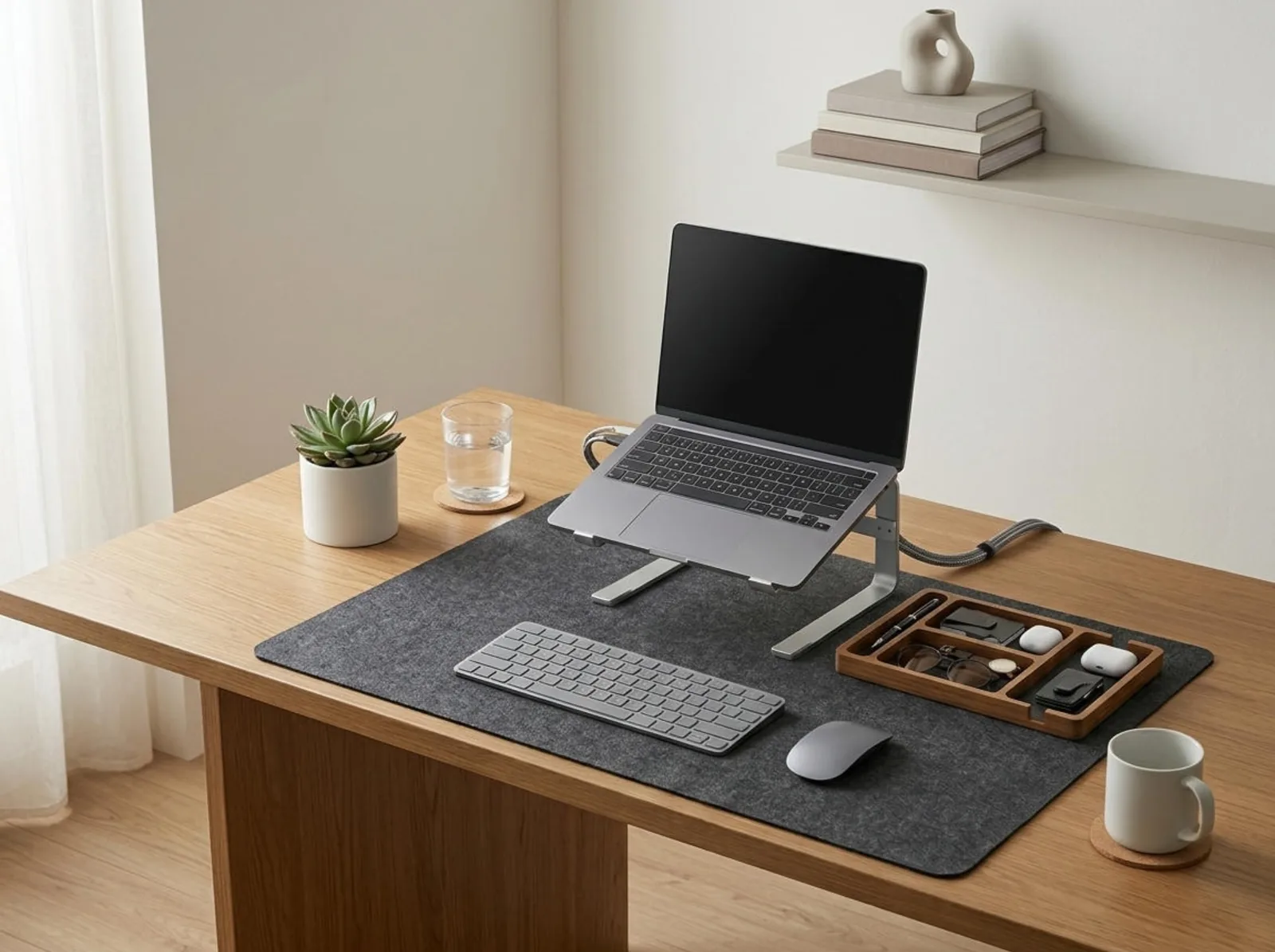
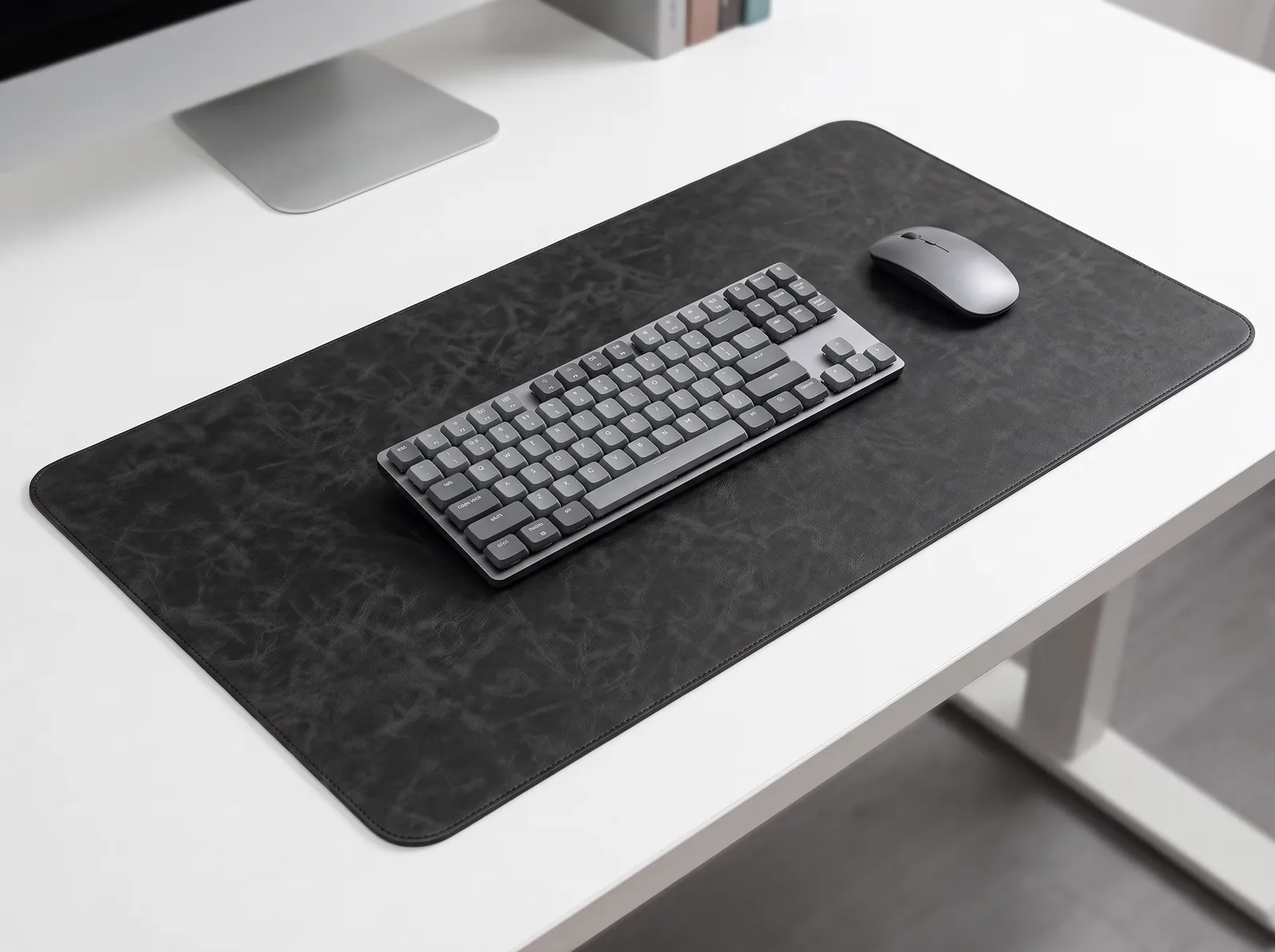
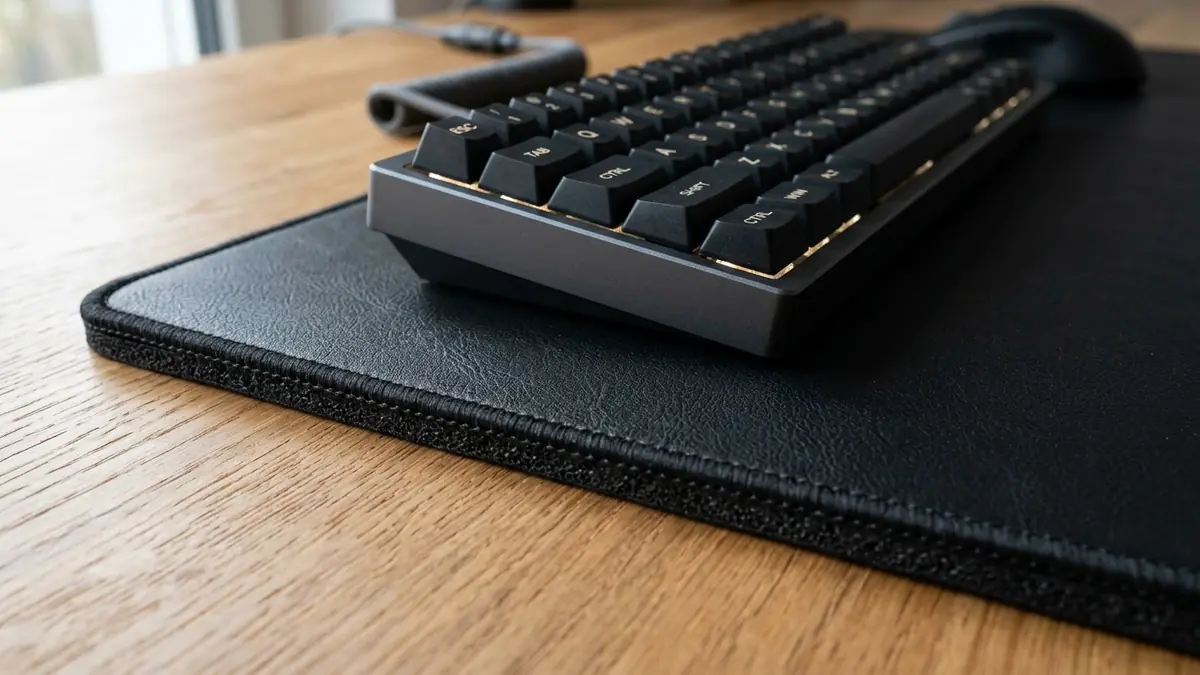
Bare wooden, glass, and laminate tabletops act as acoustic soundboards, amplifying mechanical keyboard switch bottom-out vibrations and transmitting high-frequency tapping noise into your room. In architectural acoustic guidelines from the Acoustical Society of America (ASA), isolating mechanical point sources and dampening hard tabletop surfaces is essential for controlling indoor speech reverberation. Laying down a high-density Premium PU Leather Desk Mat creates an essential acoustic dampening layer that absorbs desk resonance and reduces typing noise by 4 to 6 decibels.
A desk organizer and tactile desk mat provide a designated, cushioned zone that protects the carpal bones and prevents repetitive contact stress.
Acoustic and tactile optimization delivers two direct focus benefits:
- Acoustic Decoupling: The 2mm high-density backing isolates mechanical switch vibrations from the desk frame, producing a muted, satisfying keystroke sound profile.
- Thermal Contact Warmth: Prevents cold hardwood or metal tabletops from chilling forearm tendons, keeping hands warm and flexible.
Review material comparisons in our guide on PU leather vs. felt vs. cork desk mats.
Tier 4: Biophilic Tactile Integration & Visual Detachment
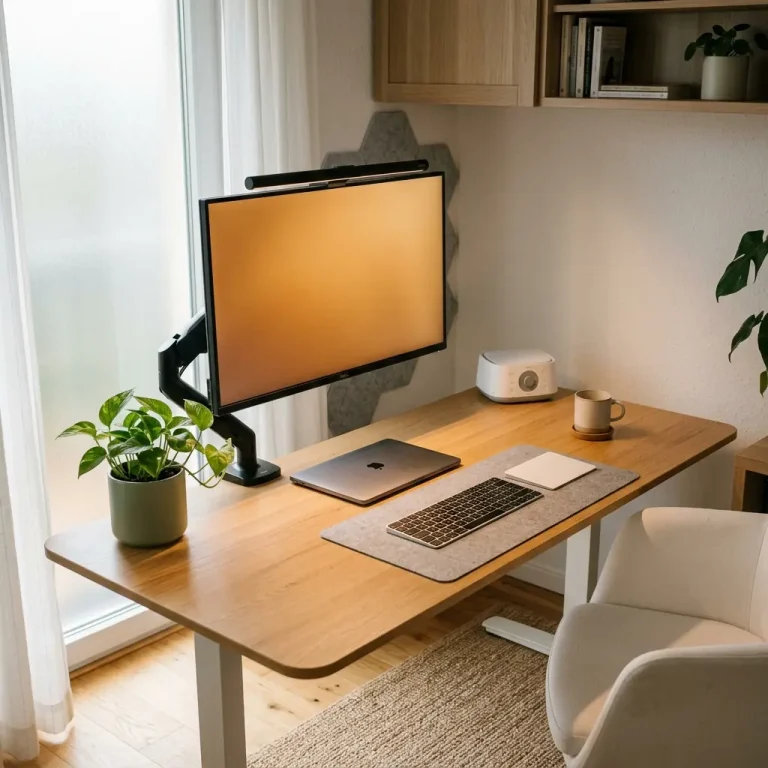
Integrating biophilic design elements—such as natural timber grain, living plants (like ZZ plants or snake plants), and tactile leather surfaces—lowers physiological stress markers by satisfying our innate evolutionary affinity for natural textures.
Biophilic workspace design incorporates living flora, organic textures, and natural timber to lower heart rate and reduce cortisol by up to 15%.
Complete your environmental architecture with vertical hardware organization:
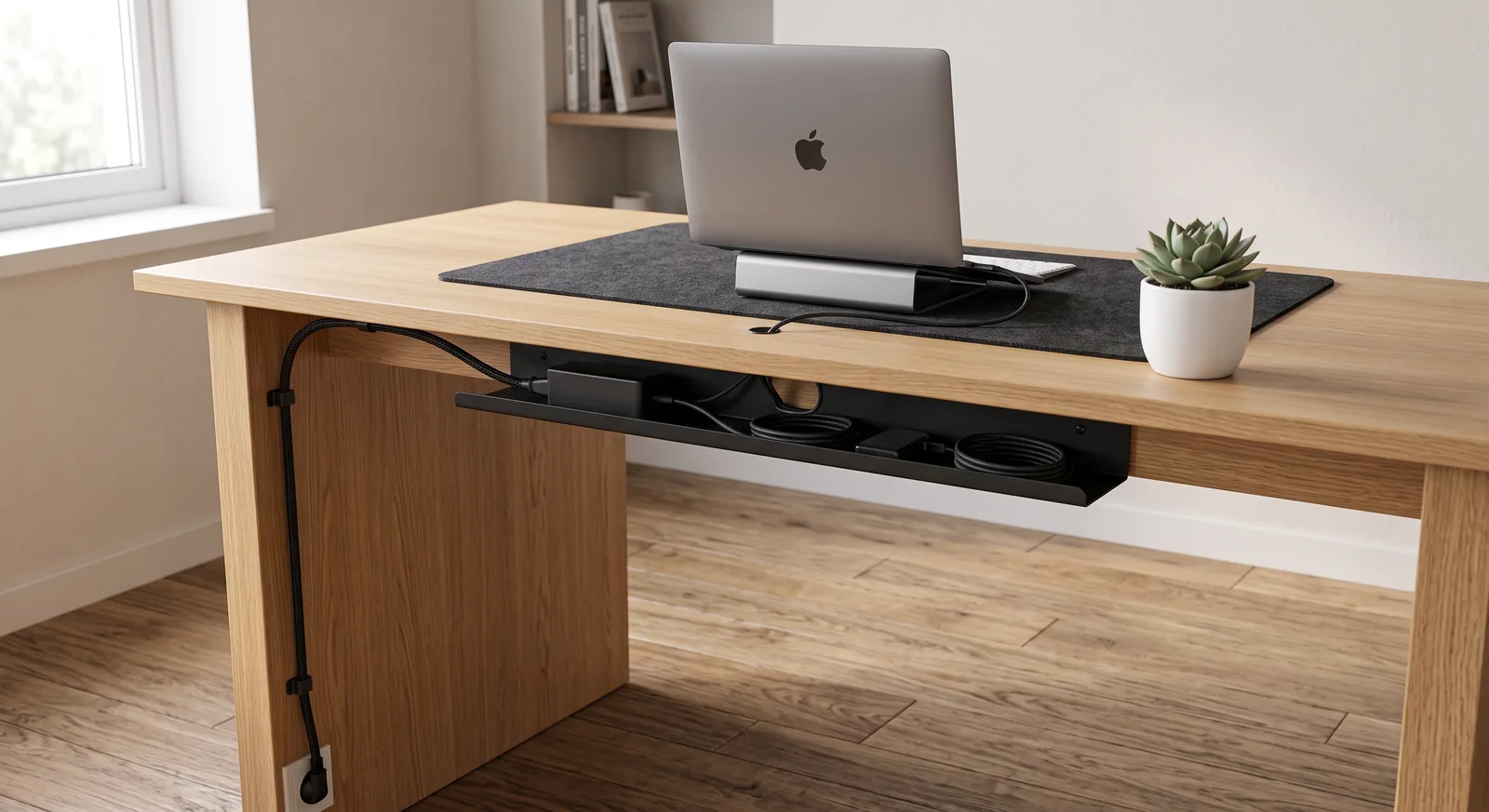
- Vertical Laptop Docking: Dock your closed machine in an Adjustable Aluminum Vertical Laptop Stand to free up space for a tabletop potted plant.
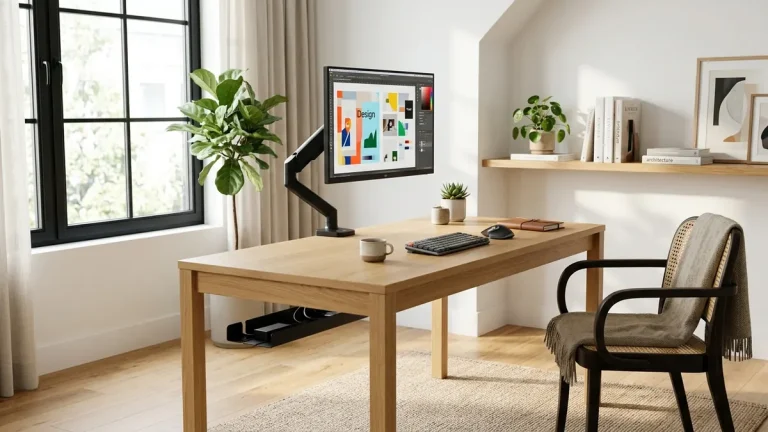
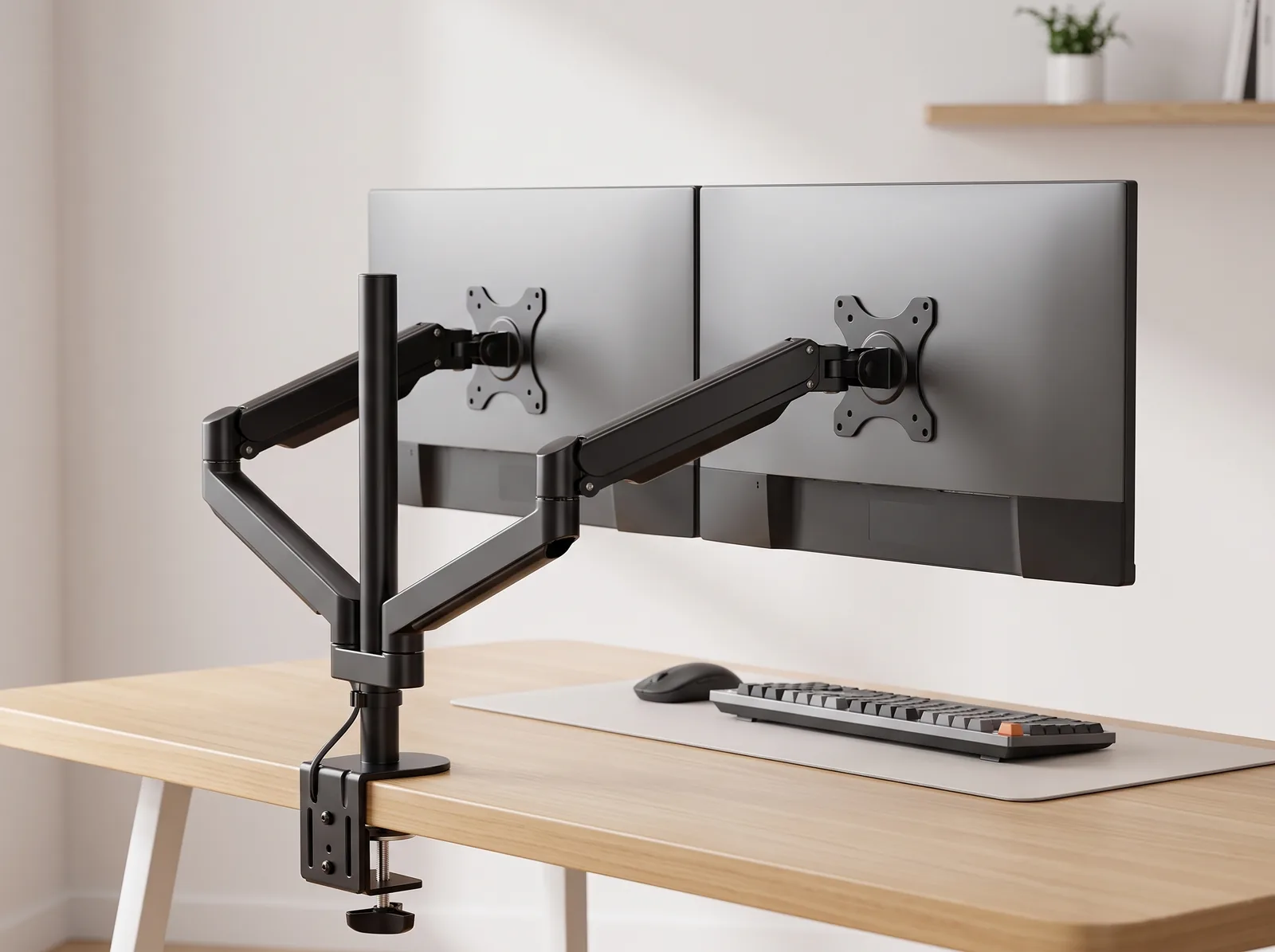
- Articulating Monitor Floating: Elevate your screen on a Full-Motion Single Monitor Arm to keep sightlines clear and open.
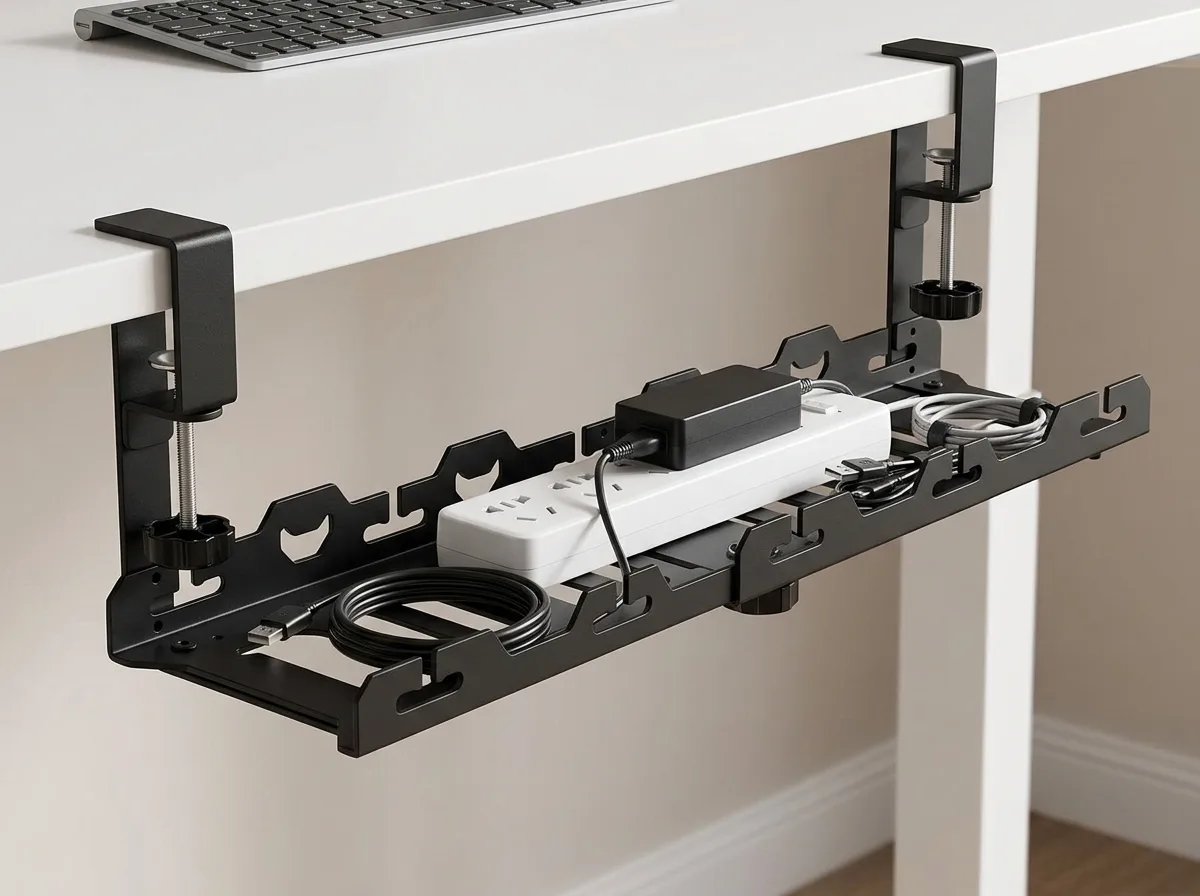
- Concealed Wire Architecture: Hide all power bricks inside an Under-Desk Cable Management Tray so zero artificial clutter breaks the organic calm.
Explore complete system blueprints in our anchor guide on minimalist workspace architecture.
Step-by-Step: Calibrating Your Desk Environment in 4 Steps
Follow this 4-step sensory tuning sequence to transform your desk into a high-focus sanctuary:
- Step 1: Install Asymmetric Task Lighting: Mount a 50cm Monitor Light Bar atop your screen and adjust angle until zero light hits the glass.
- Step 2: Establish Circadian Routines: Set light to 6500K cool white at 9 AM and transition down to 2700K warm amber by sunset.
- Step 3: Lay Acoustic Surface Pad: Center a high-density PU leather mat beneath your keyboard and mouse to dampen vibrations.
- Step 4: Add Biophilic Touch: Place a small potted indoor plant on the secondary desk perimeter to soften the tech aesthetic.
Frequently Asked Questions
What are the key elements of workspace environmental architecture?
The key elements are asymmetric glare-free task lighting, circadian color temperature tuning (2700K–6500K), acoustic dampening desk pads, biophilic natural textures, and 100% concealed cable infrastructure.
How does circadian lighting improve daily productivity?
Cool 6500K daylight in the morning boosts alertness and dopamine, while warm 2700K light in the evening prevents blue-light retinal stimulation, ensuring natural melatonin production and deep restorative sleep.
Why are traditional desk lamps inferior to monitor light bars?
Traditional desk lamps cast asymmetrical light across only one side of the desk, create specular glare on monitor glass, and consume valuable desk surface area. Monitor light bars cast glare-free forward light with zero desktop footprint.
How does a desk mat reduce mechanical keyboard noise?
A high-density 2mm PU leather desk mat absorbs the harsh acoustic vibrations of mechanical switches bottoming out against hard desk surfaces, reducing high-frequency clatter by 4 to 6 decibels.
What indoor plants are best for desktop biophilic design?
Low-maintenance indoor species like ZZ plants, Snake plants (Sansevieria), and Pothos thrive in indirect room lighting and help filter ambient volatile organic compounds (VOCs) without messy maintenance.
How much illumination (lux) should a desk have for computer work?
For computer tasks, the desk surface should have between 300 and 500 lux of warm, balanced light, which provides clear document readability without competing with monitor brightness.